The new wave of oceanographers: Melly Lauze
Master’s degree in Biodiversity, Ecology and Evolution looking for a PhD position in marine biodiversity conservation.
Master’s degree in Biodiversity, Ecology and Evolution looking for a PhD position in marine biodiversity conservation.
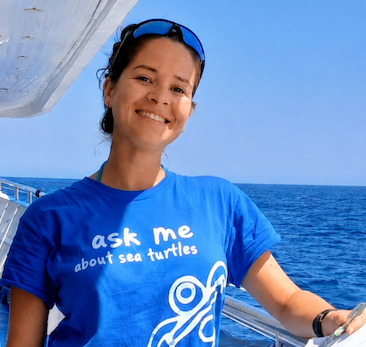
Melly Lauze holds a Bachelor’s degree in Biosciences and a Master’s degree in Biodiversity, Ecology and Evolution from Université Claude Bernard Lyon 1, during which she specialized in Anthropocene Ecology. She carried out her final-year internship at the Mediterranean Institute of Oceanography (MIO) and she’s now seeking a PhD position.
SWOT AdAC: What is your field of research and how did you choose it?
Melly Lauze: My academic background is quite interdisciplinary, at the intersection of ecology, biology and data analysis. I am particularly interested in using statistical models to better understand how ecosystems function and to address ecological and species conservation questions.
This is what led me to my six-month Master’s internship at the Mediterranean Institute of Oceanography (MIO), Marseille, France. There, I studied marine particles, a ubiquitous and highly diverse component of the ocean. They include a wide range of objects suspended in the water column, so they vary widely in size, shape, composition and origin. Marine particles play an important role in marine ecosystems and in the transfer of organic carbon from surface waters to the deep ocean, thereby contributing to the ocean’s role as a major carbon sink and its capacity to mitigate climate change. This diversity and the many processes that control their production, transformation and transport make them particularly complex to study. This is also what makes them such an interesting research topic, with many aspects that still remain to be understood.
The data I analysed were collected during the 2023 BioSWOT-Med campaign, before I joined MIO, using an Underwater Vision Profiler (UVP5) and gliders. Based on these observations, I investigated how abundance and size of particles varied with depth, in an environment shaped by fine-scale oceanic structures that typically span 1–100 km and evolve over days to weeks.
This internship allowed me to discover how statistical tools can help us better understand the marine particle compartment, which reflects the close coupling between physics, biology and biogeochemistry in the ocean.
SWOT AdAC: How is your research related to SWOT?
ML: My work is part of the BioSWOT-Med campaign, which took place in the Northwestern Mediterranean Sea in 2023 alongside observations from the SWOT satellite. One of the campaign’s objectives was to investigate how fine-scale oceanic structures, such as Northern Balearic Front and an anticyclonic eddy in this area, influence biological and biogeochemical processes in the water col-umn.
The campaign took place during a period of numerous SWOT overpasses over the study area, providing an exceptional opportunity to monitor these fine-scale structures on a daily basis. Because these structures are mobile and difficult to study in situ, sampling them requires adaptive strategies, including so-called Lagrangian approaches, which aim to follow their movement over time. This was the approach adopted during BioSWOT-Med. The sampling strategy was guided by a combination of SWOT observations, surface chlorophyll maps, ocean circulation models and insitu measurements, in order to position sampling stations as close as possible to the oceanic structures of interest. It was within this framework that the particle data I later analysed were collected.
SWOT AdAC: What do you find exciting about the SWOT-AdAC campaign to which you contributed?
ML: What I particularly enjoyed about BioSWOT-Med was seeing researchers with different areas of expertise come together around the same scientific question. Everyone contributed their own expertise, whether through satellite observations, physical and biological oceanography, or sta-tistical analysis, with the shared goal of building a more complete picture of how the ocean functions. It was particularly interesting to discover how a large oceanographic campaign works in practice and to see how different sources of data can be combined to study the same system. I am very grateful to have been part of such a project and to have met so many passionate researchers.
My contribution consisted of analysing particle size data to investigate their spatial organisation and temporal trajectories, with the aim of identifying their sources and following their fate within the water column, in the dynamic and contrasting environment of the Northwestern Mediterranean. In particular, I mainly used Gaussian Mixture Models to identify recurring patterns in particle size distributions and to explore their relationships with this specific hydrological context.
SWOT AdAC: What are your plans after you finish analysing SWOT data?
ML: Going forward, I would like to continue working in marine research, with a particular interest in the conservation of marine megafauna. In the longer term, I would like to pursue a PhD in this field, using my skills in ecology and data analysis to contribute to addressing concrete conservation challenges.
I also really enjoy being involved in non-profit organisations, whether through outreach activities or fieldwork. So I would therefore like to continue doing my part to bridge the gap between scientific research and species conservation.
SWOT AdAC: Besides SWOT, are you involved in another exciting research and do you want to share something about it?
ML: My internship at MIO encouraged me to continue exploring the connections between marine ecology, physical oceanography and data analysis. It also gave me the opportunity to discover other aspects of oceanographic research, for example by joining a research vessel during the MOOSE-ANTARES campaign. This allowed me to observe the UVP in operation and to better understand how the data I had been analysing were actually collected at sea. I am currently continuing to work on these results, with the aim of developing them into my first scientific publication.
Overall, I am particularly interested in understanding how human activities affect ecosystems and biodiversity, and how this knowledge can support conservation. In addition to formal training, I gained experience in marine ecology through summer schools and volunteering with organizations dedicated to ocean conservation (like “Wings of the Ocean” in France, and “Archelon” in Greece).
These experiences have strengthened my desire to continue in research. I now hope to pursue a PhD in marine biodiversity conservation, particularly focused on marine megafauna, while continuing to build on my skills in statistics and data analysis.
Drawing on fine-scale surface dynamics observed during a large drifter experiment in the Western Mediterranean Sea, a recent study assessed the quality of SWOT sea level measurements acquired during the 1-day repeat orbit phase. This work establishes a benchmark for extending SWOT sea level assessments to the global ocean.
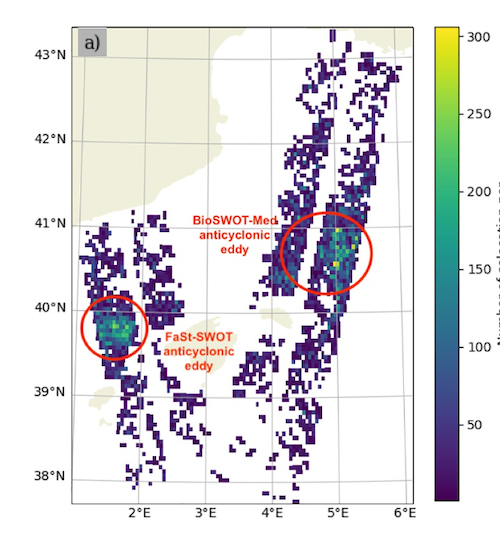
Spatial distribution of Surface Water and Ocean Topography‐drifter colocations in the Western Mediterranean Sea during the fast sampling period. Credits: Demol et al. 2026
The SWOT satellite captures sea level data at an unprecedented resolution making it possible to study fine-scale ocean processes and their role in the climate system. However, estimating the direction and intensity of fine-scale currents from SWOT measurements remains challenging due to various sources of error, including instrumental errors of SWOT’s KaRin altimeter and a still incomplete knowledge about ocean surface dynamics.
To overcome these challenges, the paper “Large Drifter Experiment in the Western Mediterranean Sea Reveals Dynamical Versus Noise Contributions in SWOT-KaRIn Sea Level” published on Geophysical Research Letters applied a novel strategy using 137 surface drifter trajectories and momentum conservation covariances analysis. This approach made it possible to assess the quality of SWOT sea level data gathered during the 1-day repeat orbit in spring 2023 in the Northwestern Mediterranean Sea.
The in situ drifter data used for the analysis were collected during three SWOT AdAC field campaigns (C-SWOT-2023, BioSWOT-Med, and FaSt-SWOT) that occurred under SWOT passes 3 and 16.
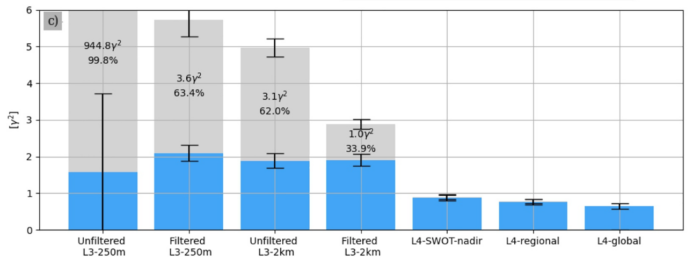
Balanced contribution (blue) and residual contribution (gray) for the different altimetric products and filtering levels. Note that the residual contribution of the unfiltered L3‐250m product is truncated because it is nearly 300 times larger than other residuals. Credits: Demol et al. 2026
Removing noise while preserving the oceanic signals of interest
Currently, various processing and filtering techniques are applied to mitigate SWOT instrumental and geophysical errors but their performance still needs to be carefully assessed to make sure that they do not remove the fine-scale dynamical signals. “In particular, we must determine whether these processing steps successfully remove noise while preserving the oceanic signals of interest. Excessive filtering may inadvertently suppress small-scale dynamical features that SWOT is specifically designed to observe“ says Margot Demol, post-doctoral researcher at the Laboratory for Ocean Physics and Satellite remote sensing, in Plouzané, France, and corresponding author of the study.
Even if SWOT sea level measurements were completely free of noise, still a fundamental challenge would remain before SWOT data can be used to confidently infer fine-scale ocean dynamics. “Surface currents are commonly derived from sea level using the geostrophic balance, which assumes that the dynamics are primarily governed by a balance between the horizontal pressure gradient force and the Coriolis force. This approximation is generally valid at large spatial scales and has been successfully used with conventional altimetry” explains Demol. “However, SWOT resolves much smaller spatial scales, where ageostrophic processes become increasingly important. At these scales, the geostrophic assumption may no longer provide an accurate estimate of surface currents. We currently lack a clear understanding of the resulting errors and of which additional dynamical processes should be included to improve current estimates” says Demol.
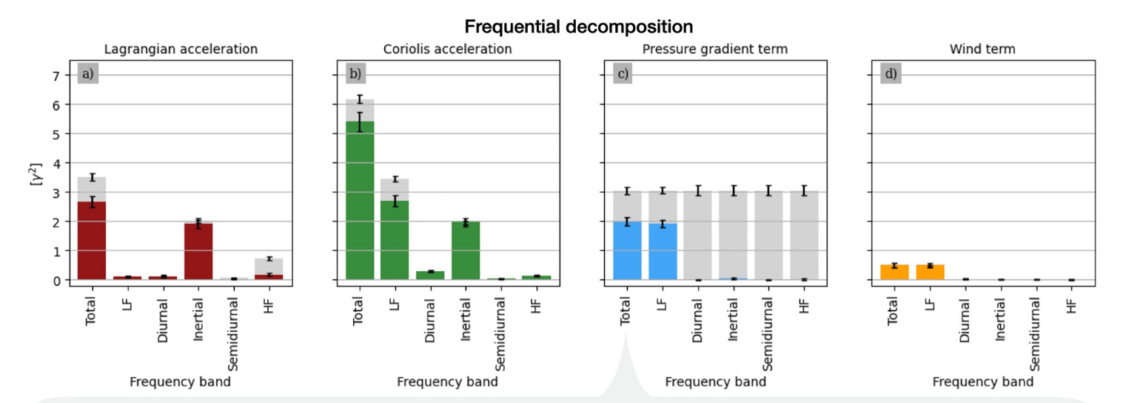
Balanced and residual contributions (colored and gray bars, respectively) for the reconstruction using the filtered L3‐2km and drifter/wind data filtered in different frequency bands. Credits: Demol et al. 2026
A strategy to assess SWOT sea level measurements relying on reconstructions of the ocean surface dynamical balance equation and a covariances analysis
A first approach to assess surface currents derived from SWOT measurements consists of comparing them with velocity estimates obtained from drifters. This approach, however, has a major limitation because it combines errors arising from measurement noise in SWOT sea level observations with discrepancies due to ageostrophic motions.
To disentangle these two sources of error, researchers developed an alternative approach. “We reconstructed the surface momentum conservation equation, including ageostrophic terms and using colocated observations from SWOT sea level measurements, drifter trajectories, and a wind reanalysis product” says Demol. By analyzing the covariances of the different terms in this equation, researchers were able to quantify the proportion of useful dynamical signal (defined as variability dynamically correlated with other terms of the momentum balance) and distinguish it from noise.
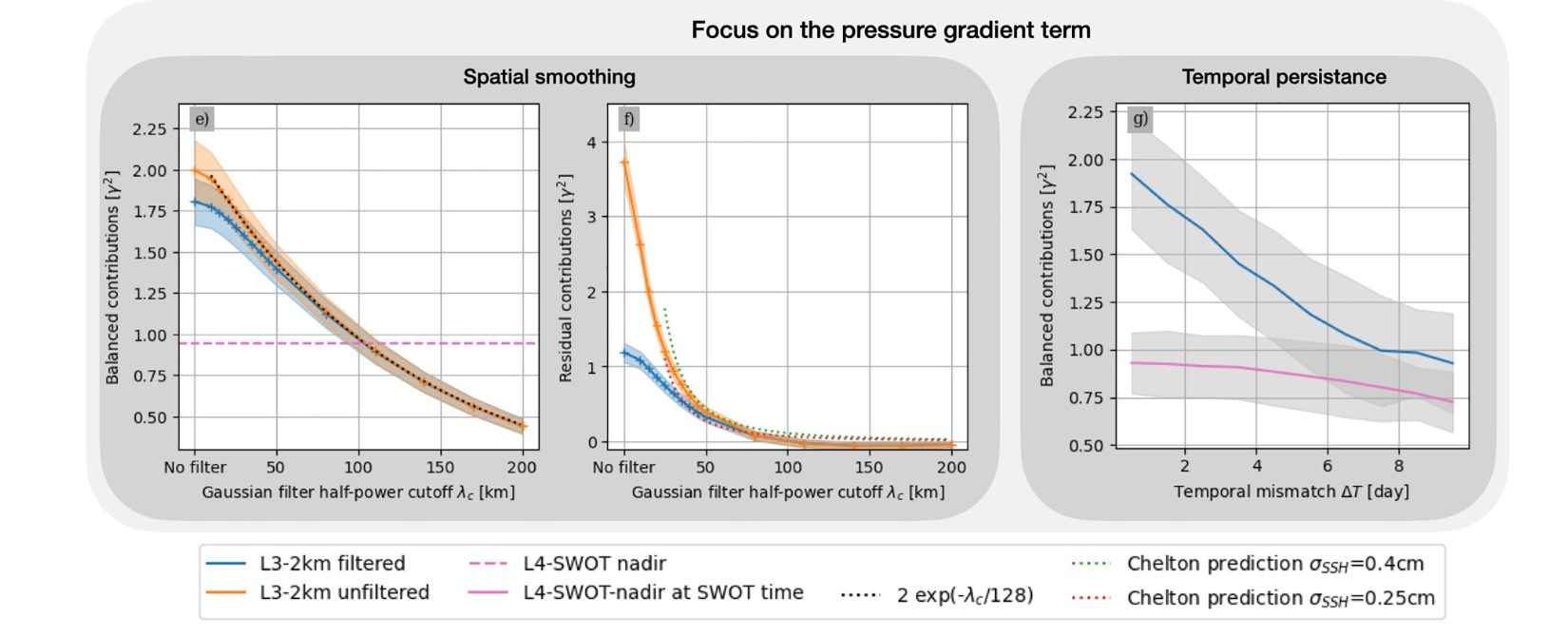
Dependency of pressure gradient term (e) balanced and (f) residual contributions on the Gaussian filter half‐power cut off wavelength λc. (g) Dependency of the pressure gradient balanced contribution on the time difference for L3‐2km product and L4‐SWOT‐nadir product but interpolated at the Surface Water and Ocean Topography time. Credits: Demol et al. 2026
Fine-scale processes are best studied with the filtered SWOT product at 2 km grid
Different SWOT products are being developed that provide sea surface height at different spatial resolutions. The study compared the amount of dynamical signal and noise across two of them, the L3-250m product and the L3-2km, providing respectively sea surface height on a 250 m × 250 m grid and on a 2 km × 2 km resolution. The comparison found that the two products show similar amounts of dynamically useful signals but differ in their noise levels, with the 2km filtered product best suited for fine-scale studies because of lower noise levels. However, even for this product, the residual noise remained about a third of total variance highlighting the need for further smoothing. How to carry out this smoothing remains an ongoing open question for the scientific community.
The study also permitted to assess that the added value of current SWOT products in assessing dynamical sea level (DSL) information concerns motions faster than 10 days, an aspect that is of particular importance for users of SWOT data in the science phase, with 21-day revisit period.
For the time period and the geographical area considered in the study, indeed, when the temporal lag is bigger than 10 days the L3-250m and L3-2km products do not provide more meaningful DSL than conventional gridded nadir-only products (L4). Although these conventional products retain only half the useful signal of L3 products, they are in fact nearly noise-free thanks to the L4 interpolation processing and thus may be more reliable for large-scale applications.
A benchmark for extending SWOT sea level assessments globally
Results from the study show that the1-day orbit provided dense enough observations to capture the bulk of the variability in the Northwestern Mediterranean Sea and that drifters are extremely valuable for the evaluation of SWOT sea level performance. The methods used in the paper provide a benchmark for extending SWOT swath sea level assessments globally.
Citation: Demol, M., Ponte, A. L., Garreau, P., Bellacicco, M., Berta, M., Centurioni, L. R., et al. (2026). Large drifter experiment in the Western Mediterranean Sea reveals dynamical versus noise contributions in SWOT‐KaRIn sea level. Geophysical Research Letters, 53,e2025GL121425. https://doi.org/10.1029/2025GL121425
Contact: Margot Demol margotdemol.oceano@proton.me
Visit the campaigns pages: C-SWOT-2023, BioSWOT-Med, FaSt-SWOT
“La mélodie du tourbillon” is a musical poem inspired by research on eddies in the Mediterranean Sea. It was produced by Tomasi Record and released on the 3rd anniversary of the BioSWOT-Med campaign.
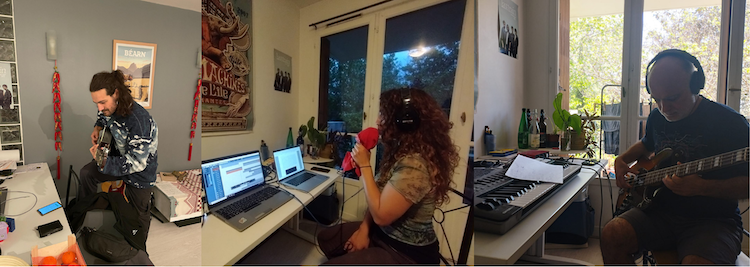
The artists during a recording session: Théo Garica, Laurina Oms, David Nérini.
“The eddy melody” (La mélodie du tourbillon) is a musical poem inspired by the research paper “Ocean Circulation Modulating the Nutrient Distribution and Fluxes at Regional and Fine scales: A Case Study in The Northwestern Mediterranean Sea” by Joël et al. published on Geophysical Research Letter. The paper investigates the role of fine-scale eddies in the distribution of nutrients across multiple scales at the North Balearic Frontal zone. The melody is inspired by the spatial pattern of eddies that were located thanks to SWOT satellite images during the fast-sampling phase.
The melody, released by Tomasi Record in conjunction with the 3rd anniversary of the BioSWOT-Med campaign, is a collaborative effort from researchers at the Mediterranean Institute of Oceanography (MIO), in Marseille, France. It was born from an idea of Andrea Doglioli (BioSWOT-Med chief scientist) based on the paper by Aude Joël; the music was composed by Théo Garcia; the words were written by Laurina Oms one night during during the BioSWOT-Med cruise. “The eddy melody” features Laurina Oms (voice), David Nérini (bass) and Théo Garcia (acoustic guitar, drums, electric guitar, harmonica, bagpipes).
To learn more how the project developed, check out the story behind the eddy melody.
LYRICS (English translation):
I wake up in the middle of the night, my body still heavy with sleep, and wander a few steps into the night, rocked by the waves. The moon is full and high in the sky, casting its light in silvery shards across the opaque surface of the water. The sea is strange tonight; not a breath of wind disturbs the fluid envelope of its world, forever misunderstood by humankind.
I feel as though I am in the middle of an immense lake, swallowing my mind into its labyrinth of infinity with every glance I cast upon it.
Beneath the surface, one of the spirits of the sea reveals itself with the lightness of a dream—it is a ray that seems to fly rather than swim. It undulates in silence; it is as if the sea agrees, for a brief moment, to surrender itself to me.
But the sea would never surrender itself to humans.
Its time fulfilled, the moon gradually detaches itself from the sky; the silvery glints turn golden, then red. It drifts beyond the horizon, accompanied by the undulating spirit. But the sea is never alone; when the moon disappears, the sun paints its first glimmers in a festival of colors.
Red, yellow, pink, blue, and green form the canvas of dawn. The sea welcomes the exotic reflections of the sky and remains in its impassive calm. Only its breathing sets it in motion; its salty lungs expand and contract in time with my own.
I, too, am leaving; I slip my half-awake body beneath my still-warm sheets.
BioSWOT-Med Campaign | BioSWOT-Med Blog
An adaptive, multidisciplinary sampling strategy guided by SWOT images across a fine-scale front in the North Balearic Sea revealed distinct phytoplankton communities within the front. Unlike highly productive, dynamic regions of the global ocean where opportunistic groups dominate at fronts, a study published on Communication Earth and Environment found that non-dominant groups increased their relative contribution within the front compared to adjacent waters. These results underscore the role of fine-scale variability in maintaining community heterogeneity, suggesting that fronts may act as refuges for non-dominant phytoplankton groups in moderately energetic, oligotrophic conditions.
Published in Communications Earth & Environment, the paper ‘Fine-scale observations reveal distinct frontal phytoplankton communities’ demonstrates that in moderately energetic, oligotrophic conditions, fronts do not necessarily increase total phytoplankton biomass. Instead, they restructure community composition by enhancing the relative contribution of less abundant groups, potentially acting as refuge for non-dominant species. These insights were enabled by an adaptive, multidisciplinary sampling strategy during the BioSWOT-Med cruise in the North Balearic Sea, which utilized SWOT satellite imagery to pinpoint a fine-scale front. Interview with Laurina Oms, first-author of the paper.
Biophysical sampling across a fine-scale front
Conducted in spring 2023, the BioSWOT-Med cruise used the first images from the SWOT fast-sampling phase to identify co-occurring fine-scale physical features and biological dynamics in the North Balearic Sea, approximately 100 km northeast of Mallorca. While traditional altimetry depicted the region as relatively flat, SWOT images revealed cyclones and anticyclones of a few tens of kilometers large. Ocean color data qualitatively confirmed these findings, aligning SWOT-derived current features with chlorophyll concentration gradients. In addition, in situ sea surface salinity measurements collected during the cruise confirmed the presence of a fine-scale frontal zone, consistent with both SWOT altimetry and ocean color observations.
To address the question of whether the phytoplankton community within the front is significantly different from those in surrounding waters, an adaptive, multidisciplinary sampling strategy was applied. This approach involved repeated transects across the fine-scale, followed by 24-hour drifting stations positioned within the front and in the two adjacent water masses. Throughout both phases, high-resolution underway data on phytoplankton biomass and community composition were collected via flow cytometry, while simultaneous hydrological properties (temperature and salinity) were recorded using a thermosalinograph (TSG).
An unprecedented dataset with exceptional spatio-temporal resolution
“Plankton are non-swimming organisms, whose displacements are mainly due to passive transport by currents. A way to understand them is then to place ourselves in a plankton point of view. The Lagrangian stations we deployed during BioSWOT-Med aimed to passively follow fine-scale currents. The positions of these Lagrangian stations were carefully chosen using a range of different methods and instruments, involving daily SWOT images, in-situ and real-time TSG data, and Lagrangian instruments (buoys). These different methods and instruments provided us accurate spatio-temporal information on fine-scale dynamics, making it possible to target a fine-scale front and stay within it during 24 hours. Phytoplankton cells were sampled along fine-scale features, ie. along their own drifting in trajectories in the currents, thank to an automated flow cytometer. This approach permitted us to collect a uniquely high-frequency biological dataset, (only 15’, corresponding for a ship speed of 6 knots of roughly 460 meters !)” says Laurina Oms, first-author of the study.
Overall, the BioSWOT-Med cruise implemented a sampling strategy specifically adapted for fine-scale plankton research through its Lagrangian framework. A distinguishing feature of the expedition was its commitment to environmental stewardship, maintaining a maximum vessel speed of 6 knots throughout the entire cruise to minimize disturbance.
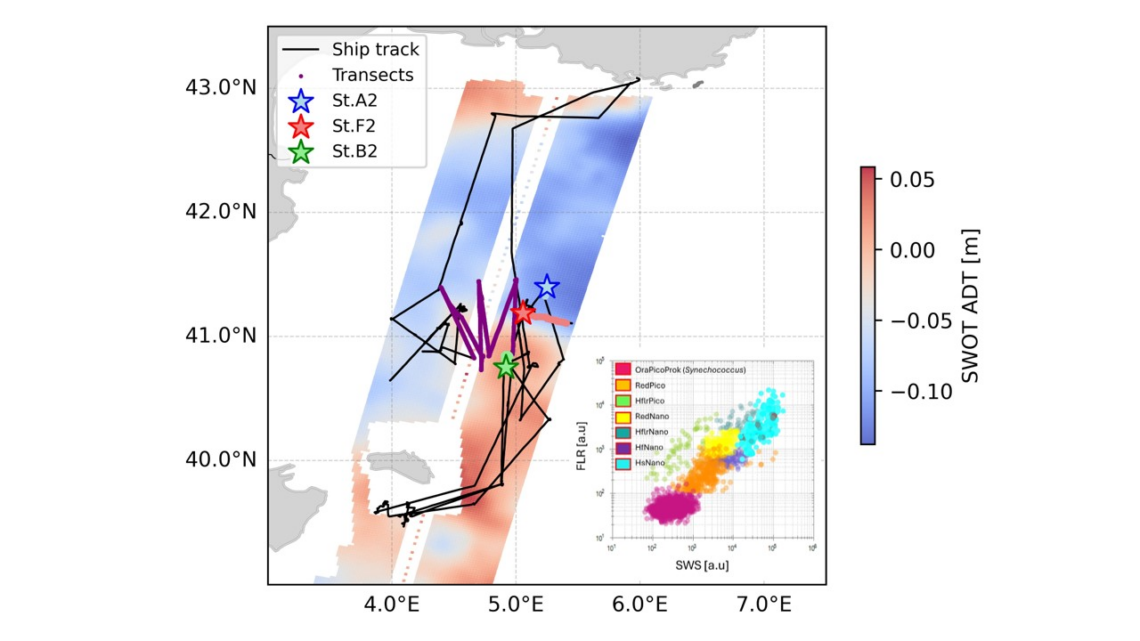
The BioSWOT-Med Sampling Region. The black line indicates the ship’s track throughout the entire cruise. The cross-front transect (purple) was conducted with a specific angular delay to track the front’s spatial evolution. Three 24-hour Lagrangian drifting stations were performed in distinct water masses: the northern mass (A2, May 7, blue star/line), the frontal zone itself (F25, May 6, red star/line), and the southern mass (B2, May 5, green star/line). Background SWOT tracks display absolute dynamic topography (m), as indicated by the color bar. The inset in the bottom right shows a representative cytogram identifying the seven phytoplankton groups detected during the cruise, plotted by side scatter (SWS, 90° light scattering) versus red fluorescence (FLR). Credit: L. Oms
Increase of non-dominant phytoplankton groups within the front
Statistical analysis of the biological dataset revealed that the phytoplankton community composition within the fine-scale front in the North Balearic Sea differed significantly from that of surrounding waters. Specifically, while total phytoplankton biomass remained unchanged, the relative abundance of non-dominant groups increased within the frontal zone compared to adjacent water masses.
These findings suggest that in moderately energetic, oligotrophic conditions like those of the Mediterranean Sea, fronts do not drive surface biomass accumulation but instead restructure community composition by favoring less abundant groups. This contrasts with observations in more energetic regions of the global ocean, where fronts typically enhance total biomass.
“In dynamical and productive regions, such as the California Current Ecosystem, it is observed that fronts enhance phytoplankton biomass, in particular the biomass of fast-growing groups such as diatoms. The distinct phytoplankton communities thus observed at fronts are mostly attributed to a significant nutrient supply upwelled in surface layers by positive vertical velocities created by the frontogenesis , which could hide other frontal effects on phytoplankton communities, such as vertical stratification, shearing, and stretching, or more generally the ephemeral and dynamic nature of fronts that could be hostile to sustaining life. In the oligotrophic conditions we encountered during BioSWOT-Med, we discovered that even a front with weaker dynamics (and no high nutrient supply) could host a distinct phytoplankton community, characterized by a distinct relative composition, without an overall increase in total phytoplankton biomass. This was also observed in the oligotrophic region of the canary Islands” says Oms.
Fine-scale fronts may act as refuge for non-dominant phytoplankton species
Based on these results, researchers have hypothesized that fine-scale fronts might act as a refuge for non-dominant phytoplankton groups in oligotrophic, low-energy environments.
“We have several hypotheses to explain the increase in the relative abundance of non-dominant phytoplankton groups, which deserve to be tested by reconstructing the full story of the cruise, i.e., putting together results from the different instruments (including genomics, nutrients, vertical velocity, zooplankton, etc.). However, one hypothesis could lie in the different ecological strategies that distinct phytoplankton species employ to maintain themselves. Frontal environments may favor organisms with broad ecological niches and high physiological flexibility. Such generalist species can tolerate rapid environmental variability and maintain growth under unstable conditions. In contrast, specialist species, well-adapted to the more stable background environment, may be disadvantaged within fronts. Consequently, frontal systems may promote non-dominant but flexible, broadly-tolerant taxa rather than dominant, specialized ones. In oligotrophic environments, where trophic chains are longer and relatively stable, frontogenesis may catalyze shifts in community structure. By disturbing established trophic interactions and physical forcings, fronts could disadvantage specialist species and create transient opportunities for non-dominant groups,” says Oms.
Relevance to society
A deeper understanding of the processes that modify phytoplankton community composition, including in oligotrophic and moderately energetic regions, is crucial for predicting plankton dynamics and their responses to global change.
“I think that for the society there is always a need to know more about life, to deeply understand how complex and precious it is, and especially to highlight the close links existing between all living organisms, including humans. The findings of our work are one piece of the giant puzzle of marine biology and each piece of the puzzle is linked somehow to the others. Without understanding plankton dynamics we will be not able to explain why sometimes we observe birds far away from the coast, nor to understand the functioning of carbon and nutrient cycles, or why it is “snowing” in the deep ocean … Climate change affect habitats and plankton populations, and so their dynamics. We know, thanks to the recent literature and now thanks to our study, that fine-scale physical features are important in determining the biogeography, the shape, and the structure of plankton communities. If we add these dynamics into predictive biogeochemical models, will our estimations of changes in the functioning of marine ecosystems and of biogeochemistry for future years be more correct?” asks Oms.
The work was supported by CNES TOSCA and the ANR–FRANCE (French National Research Agency) ANR-23-CE01-0027.
Article first published on AVISO.
Citation: Oms, L., Doglioli, A., Messié, M. et al. Fine-scale observations reveal distinct frontal phytoplankton communities. Commun Earth Environ 7, 468 (2026). https://doi.org/10.1038/s43247-026-03350-0
Contact: Laurina Oms (laurina.oms@bio.ens.psl.eu)
SWOT helps revealing the role of fine-scale eddies in nutrient redistribution in oligotrophic waters
Investigating zooplankton at SWOT scales in the NW Mediterranean: a legacy of François Carlotti

The animated video “Fabuleuse Rencontres” – currently available in French – focuses on some of the first scientific findings of the BioSWOT-Med campaign, which investigated what drives phytoplankton diversity at fine scales in the Mediterranean Sea.
For a fortunate coincidence, the video was published today, concomitant with the publication in Communications Earth & Environment of the paper ‘Fine-scale observations reveal distinct frontal phytoplankton communities’ which reveals the role of fine-scale variability in maintaining phytoplankton diversity in moderately energetic, oligotrophic conditions.
BioSWOT-Med Campaign | BioSWOT-Med Blog
A study published on Geophysical Research Letters shows that in the North Western Mediterranean Sea, fine-scale eddies can contribute to redistribution of nutrients across distinct scales, first by their accumulation deep inside the eddy and then through lateral diffusion outside it. With climate change, the oligotrophic conditions typical of the Mediterranean Sea are expected to expand in the global ocean and results from this work represents an important contribution in understanding the evolution of biogeochemical processes in the future.
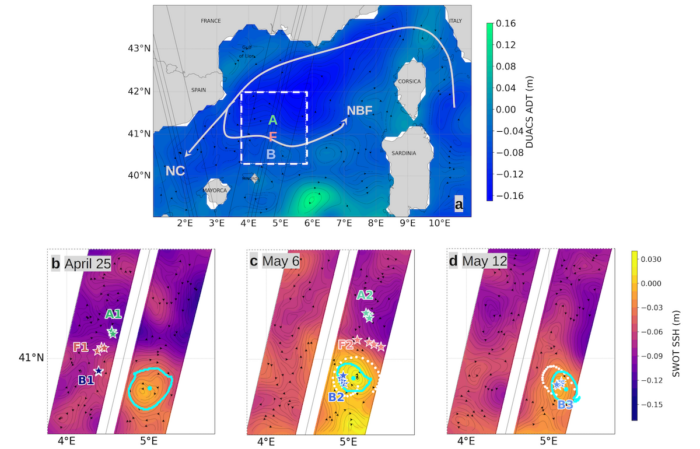
Study site of the BioSWOT-Med cruise with the frontal zone (F) and distinct water masses (A and B). Bottom: Sea surface height from SWOT satellite, eddy location. Credits: Joël et al. 2026
The paper “Ocean Circulation Modulating the Nutrient Distribution and Fluxes at Regional and Fine scales: A Case Study in The Northwestern Mediterranean Sea” published in Geophysical Research Letter investigates the role of fine-scale eddies in the distribution of nutrients across multiple scales at the North Balearic Frontal zone.
The Mediterranean Sea is one of the most oligotrophic regions of the global ocean. Numerical models have consistently indicated that fine-scale processes play a significant role in shaping vertical nutrient distributions in oligotrophic regions. However, near-detection-limit surface nutrients concentration make resolving fine-scale biogeochemical variability challenging. For this reason, empirical validation of model signals has been limited by the scarcity of high-resolution, co-located, physical and biogeochemical observations.
During the BioSWOT-Med cruise, near-real time data of sea surface height from the SWOT satellite guided the identification of a fine-scale frontal area. Here, the combination of high-frequency vertical sampling, nanomolar phosphate detection, and B-spline interpolation provided robust estimates of nutrient distribution across and within the North Balearic Front, from regional to fine scales. This dataset allowed to evaluate how local dynamics modulate vertical nutrient structures and to shed light on the coupled biogeochemical–physical processes that regulate new nutrient supply in oligotrophic environments. In situ data allowed to study for the first time the lateral transport of nutrients at fine scales.
Fine-scale circulation modulates nutrient distribution across distinct scales
Results showed that distinct water masses were characterized by different nutrient availability, suggesting that fine-scale circulation modulates nutrient distribution. Results also showed that the sampled eddy contributed to nutrient redistribution across distinct scales: within its core via enhanced turbulence, toward the oligotrophic waters south of the front through lateral isopycnal transport, and by increasing the effective permeability of the front, thereby facilitating south–north exchanges that may help sustain elevated biomass on its northern flank, particularly in post-bloom conditions.
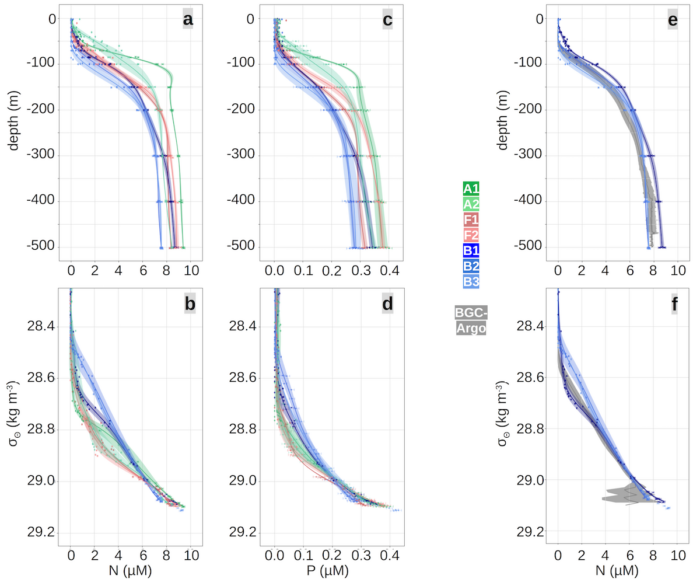
Nutrient concentration profiles for nitrates (N) and phosphates (P). Credits: Joël et al. 2026
Two different mechanisms are likely to explain how the eddy contributed to nutrient redistribution across distinct scales, first by an accumulation deep inside the eddy, and then through lateral diffusion outside the eddy. “The anticyclonic circulation of the eddy induces an accumulation of water at the center of the eddy as evidenced by the highest ssh patch in the zone. This process is at the origin of the deepening of isopycnals. Nutrients are therefore displaced deeper, outside of the photic layer and become unavailable for the photosynthesis” says Aude Joël, PhD candidate in Oceanography at Aix-Marseille University and first author of the paper. “A deep reservoir of nutrient is then constiuted by the eddy, that becomes a supply for surrounding waters, in and across the front, through lateral diffusive fluxes (i.e through difference of nutrient gradient and thanks to the presence of the eddy that generate stirring and horizontal turbulence)”.
The proposed mechanism is especially crucial in oligotrophic regions, where nutrients are scarce and rapidly consumed by primary production within the sunlit layer. “In oligotrophic conditions, even the slightest injection or removal of nutrients can significantly impact local productivity. Such processes may either further enhance oligotrophic conditions or, conversely, provide an additional nutrient supply. In more energetic regions, other mechanisms, such as upwelling, also play a role and likely dominate over the effects of small fine-scale structures like this type of eddy. The study of these interactions in oligotrophic region is quite important since they represent about 70% of the global ocean” says Joël.
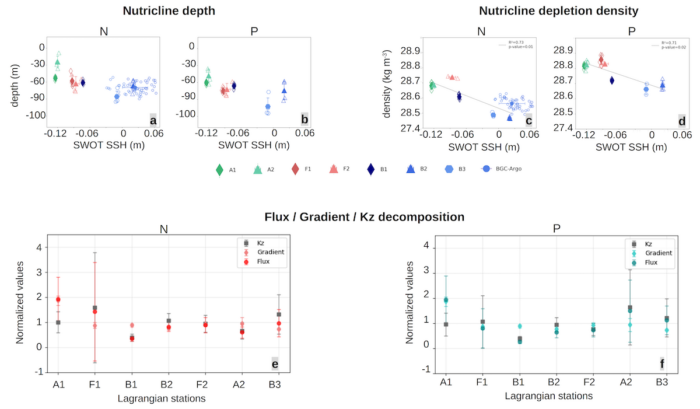
Nutricline depth and density. Credits: Joël et al. 2026
The Mediterranean Sea as a laboratory for the impacts of climate change
Previous works linking SSH and subsurface nutrient structure at mesoscale demonstrated regional and seasonal variability in physical–biogeochemical coupling, with complex implications for ecosystem functioning. The significant relationship identified in this study between SWOT SSH and nutricline properties in density space reveals this coupling at unprecedented resolution. It highlights fine-scale features as active drivers of nutrient distribution and supports the view that physical fine-scale dynamics shape important nutrient pathways in oligotrophic seas where ecosystems are highly sensitive to nutrient availability and highly dynamic.
“Recent modelling studies have indicated that the global ocean will become more and more oligotrophic due the global warming: The Mediterranean Sea can be seen as a laboratory to study the effect of climate change for that matter’ says Joël.
Under climate change, the oligotrophic conditions typical of the Mediterranean Sea are indeed expected to expand to other regions of the global ocean. Giving the ubiquity of fine scales in the ocean, this work represents an important contribution in understanding the evolution of biogeochemical processes in the future.
The work was supported by French spatial agency Centre Nationales Etudes Centre National d’Etudes Spatiales (CNES) and the French National Research Agency (BIOSWOT ANR-23-CE01-0027).
Citation: Joël, A., Doglioli, A. M., Bosse, A., Bouruet-Aubertot, P., Buniak, L., Capet, X., et al. (2026). Ocean circulation modulating the nutrient distribution and fluxes at regional and fine scales: A case study in the Northwestern Mediterranean Sea. Geophysical Research Letters, 53, e2025GL120726. https://doi.org/10.1029/2025GL120726
Contact: aude.joel@mio.osupytheas.fr
Investigating zooplankton at SWOT scales in the NW Mediterranean: a legacy of François Carlotti
BioSWOT-Med Campaign | BioSWOT-Med Blog
The BioSWOT-Med cruise (https://doi.org/10.17600/18002392) was the main study site for CNES during SWOT fast-sampling phase. Guided by early SWOT images, it located a fine-scale front in the northwestern Mediterranean Sea and adopted an adaptive Langrangian sampling strategy to gather an unprecedented high-resolution dataset of physical and biological variables across and within the front as well as in a nearby fine-scale eddy. The first four scientific papers from the cruise challenge assumptions about the physical and biological functioning of marine ecosystemsin low energy and low nutrient conditions. Results might apply to the other oligotrophic and moderately energetic regions of the global ocean and provide indication for future developments of earth system models and biogeochemical models.
An adaptive sampling strategy
The BioSWOT-Med cruise took place under track #3 of the SWOT satellite during its 1-day repeat orbit in the spring 2023. The main study site for CNES, this interdisciplinary campaign investigated the role of fine scales in shaping the structure and functioning of marine ecosystems from the physics, through plankton dynamics, and up to marine top predators.
An adaptive sampling strategy was implemented to investigate three distinct water masses across the North Balearic Front (Northwestern Mediterranean Sea). A relatively more productive water mass north of the front (referred to as ‘A’), a more oligotrophic and less productive one south of the front (‘B’), and the frontal zone itself (‘F’). Physical and biological parameters were collected and the occurrence of two storms during the cruise added to the interest of the study, allowing the BioSWOT-Med crew to explore the impact of strong wind events over fine-scale dynamics.
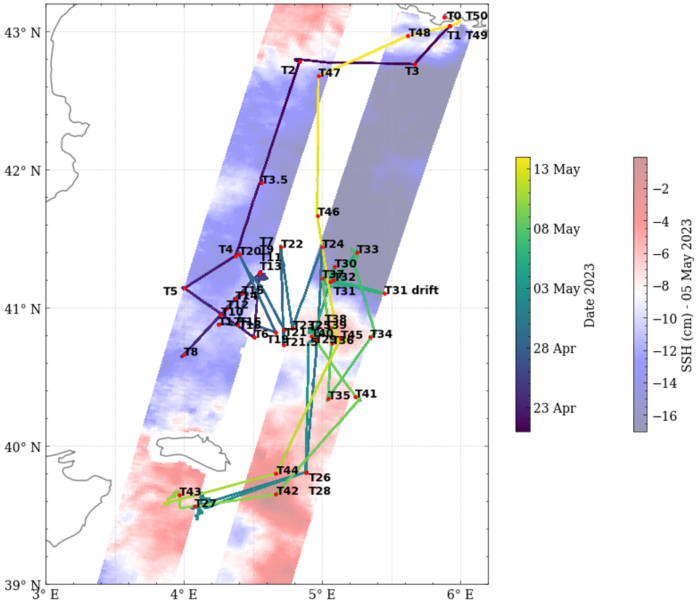
Map of the route of the BioSWOT-Med cruise. The route line is colored as a function of time and it is superposed to the SWOT pre-validated data. Credits: BioSWOT-Med cruise report.
Fine-scale eddies are as efficient as larger and more energetic structures in modulating turbulence in the ocean interior
The paper “Near-inertial wave trapping inside a fine-scale anticyclonic eddy during the BioSWOT-Med 2023 cruise: turbulence and energy flux” published on Journal of Geophysical Research: Oceans investigates how fine scales control the spatio-temporal variability of turbulence around the North Balearic Front.
The Balearic front separates a fine-scale anticyclonic eddy from a cyclonic area. Near-inertial waves are generated at large scale but are only trapped in the anticyclonic eddy. The front acts as a barrier for the near-inertial wave propagation. While the near-inertial waves propagate at depth into the eddy, they generate vertical shear that in turn leads to enhanced turbulence. On the other side of the front the absence of trapping (and then, of near-inertial wave propagation) explain the absence of turbulence enhancement.
The study found that fine-scale eddies are efficient for trapping near-inertial waves and driving vertical fluxes of energy below the mixed layer. In the past, this process of trapping has been observed in large anticyclonic eddies (ones that nadir altimetry could capture) or studied in idealized numerical studies. In principle, to be trapped, the near-inertial waves should be smaller than the anticyclonic eddy. The study shows that this process also occurs in smaller (fine-scale) anticyclonic eddy, for which the size of the near-inertial waves can be similar. Among previous observations of this process, only a few provided microstructure measurements, and even less provided vertical energy flux estimations, which are both important to quantify its effect on the mixing and the ocean energetics. The study provided both.
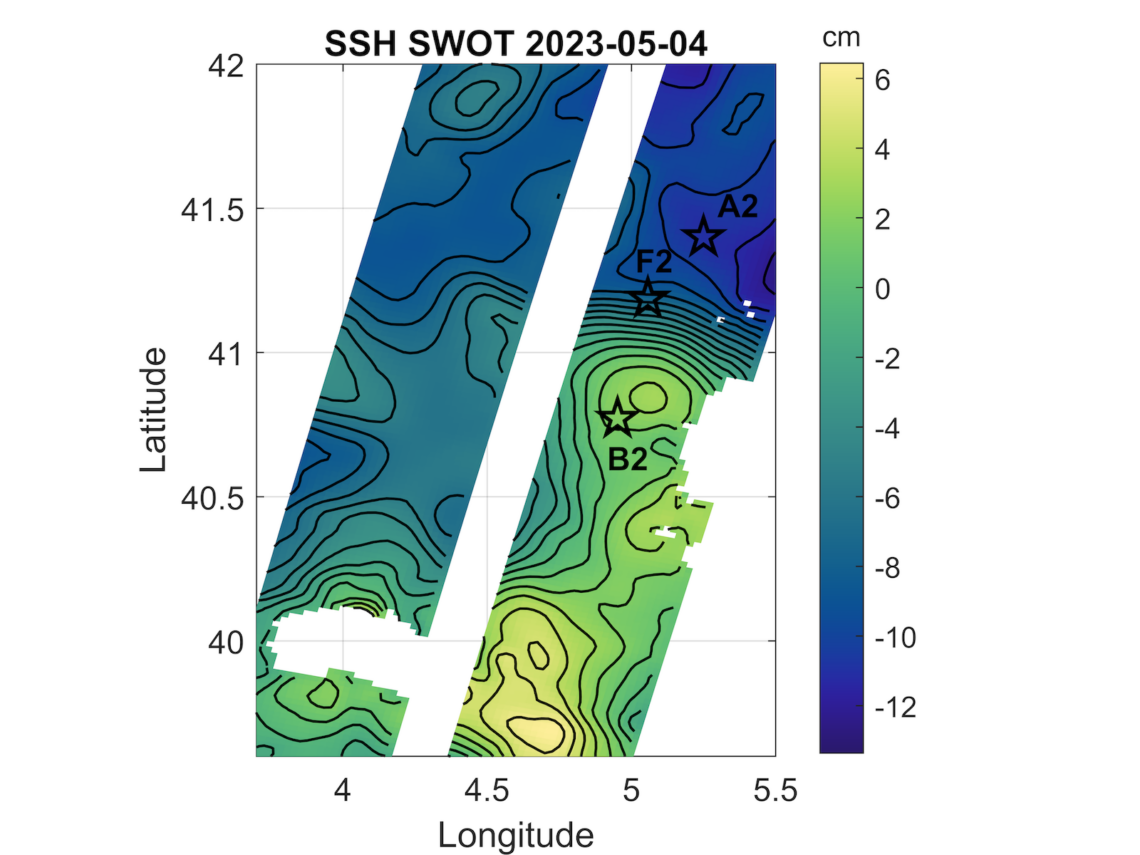
SWOT sea surface height measurements show an anticyclonic eddy that was not visible with nadir altimetry. SWOT data were acquired during stations B2 (located inside the anticyclonic eddy), station locations are indicated with black stars. Credits: Rolland et al. 2026
Eddies contribute to nutrient redistribution across distinct scales
The paper “Ocean Circulation Modulating the Nutrient Distribution and Fluxes at Regional and Fine scales: A Case Study in The Northwestern Mediterranean Sea” accepted in Geophysical Research Letter investigates the distribution of nutrients at fine scales across the North Balearic Front.
The Mediterranean Sea is considered one of the most oligotrophic region of the global ocean. Numerical models have consistently indicated that fine-scale processes play a significant role in shaping vertical nutrient distributions in oligotrophic regions. However, near-detection-limit surface nutrients concentration make resolving fine-scale biogeochemical variability challenging. For this reason, empirical validation of model signals has been limited by the scarcity of high-resolution, co-located, physical and biogeochemical observations.
During the BioSWOT-Med cruise, the combination of high-frequency vertical sampling, nanomolar phosphate detection, and B-spline interpolation provided robust estimates of nutrient distribution across and within the North Balearic Front, from regional to fine scales. This allowed to evaluate how local dynamics modulate vertical nutrient structures and to shed light on the coupled biogeochemical–physical processes that regulate new nutrient supply in oligotrophic environments.
Results suggest that the sampled eddy contributes to nutrient redistribution across distinct scales: within its core via enhanced turbulence, toward the oligotrophic waters south of the front through lateral isopycnal transport, and by increasing the effective permeability of the front, thereby facilitating south–north exchanges that may help sustain elevated biomass on its northern flank, particularly in post-bloom conditions.
Fine-scale fronts as a refuge for non-dominant phytoplankton groups
The paper “Fine-scale observations reveal distinct frontal phytoplankton communities” accepted for publication in Communications Earth & Environment, investigated changes in phytoplankton community composition across and within the North Balearic Front.
High-resolution underway data on phytoplankton biomass and community composition collected via flow cytometry across and within the North Balearic Front allowed the collection of an unprecedented high-resolution dataset.
Statistical analysis revealed that the phytoplankton community composition within the North Balearic Front (water mass F) differed significantly from that of surrounding waters (the more productive water mass A at the north and more oligotrophic and less productive water mass B south of the front). Specifically, while total phytoplankton biomass remained unchanged, the relative abundance of non-dominant groups increased within the frontal zone compared to water masses A and B.
These findings suggest that in moderately energetic, oligotrophic, conditions like those of the Mediterranean Sea, fronts do not drive surface biomass accumulation but instead restructure community composition by favoring less abundant groups. This contrasts with observations in more energetic regions of the global ocean, where fronts typically enhance total biomass.
These results underscore the role of fine-scale variability in maintaining community heterogeneity, suggesting that fronts may act as refuges for non-dominant phytoplankton groups in moderately energetic, oligotrophic conditions.
Fine-scales fronts as an ecological boundary for zooplankton
The paper “The North Balearic Front as an ecological boundary: zooplankton fine-scale distribution patterns in late spring” published in Biogeosciences presents the first detailed investigation of zooplankton distribution at fine scales in the North Balearic Front. Results from the study challenge general assumptions about the ecological role of oceanic fronts. In particular, the North Balearic Front exhibited characteristics more akin to a boundary between water masses than a zone of pronounced biological accumulation.
Oceanic fronts are often assumed to act as zones of biomass accumulation and enhanced productivity, but they can also function as ecological boundaries separating distinct communities. Results from the paper support the latter role, as zooplankton abundance was lowest at the North Balearic Front and community composition differed across it, particularly in surface layers. This challenges the general view of fronts as systematic biological hotspots.
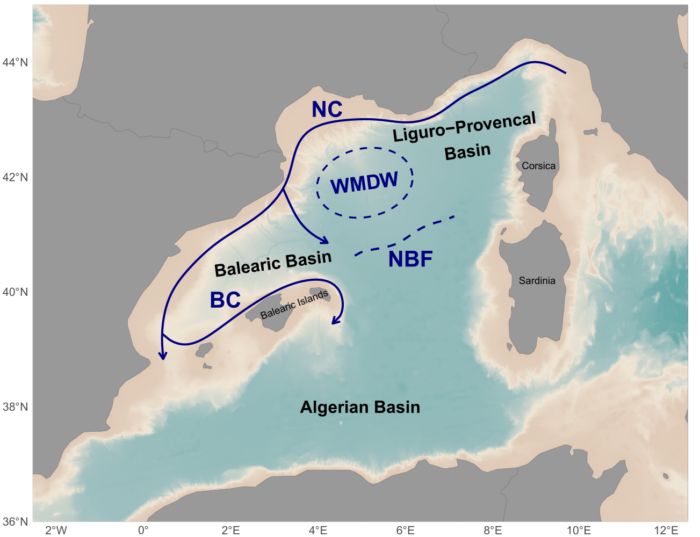
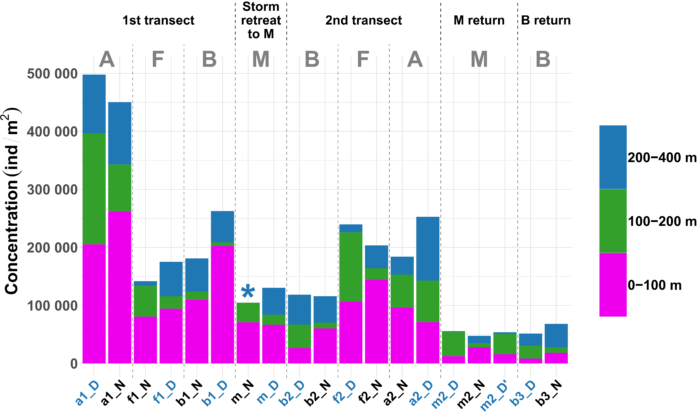
Map of the Northwestern Mediterranean Sea showing the major oceanographic features (left) and concentration of zooplankton at the sampling stations carried out during the BioSWOT-Med cruise (right). Credits: Duranson et al. 2025
New challenges for earth system models and biogeochemical models
Fine-scale structures are ubiquitous in the ocean and oligotrophic regions are projected to expand under climate change. The findings of the BioSWOT-Med cruise are likely to apply to other regions of the global ocean and suggest improvements in the parameterization of earth system models and biogeochemical models. For example:
The BIOSWOT-Med project, supported by CNES and by ANR (ANR‐23‐CE01‐0027) is now continuing, focusing in particular on the exploitation of genomics data on phytoplankton communities collected during the cruise. These data are expected to provide further insights on the way in which fine scales impact the “patchiness” of phytoplankton functional types and taxa in the ocean.
Citations:
Duranson, M., Berline, L., Guilloux, L., Della Penna, A., Ohman, M.D., Gastauer, S., Cotte, C., Bănaru, D., Garcia, T., Berta, M. and Doglioli, A., 2026. The North Balearic Front as an ecological boundary: zooplankton fine-scale distribution patterns in late spring. Biogeosciences, 23(1), pp.363-385. https://doi.org/10.5194/bg-23-363-2026
Joël, A., Doglioli, A., Bosse, A., Bouruet-Aubertot, P., Buniak, L., Capet, X., d’Ovidio, F., Gregori, G.J., Martellucci, R., Mauri, E. and Menna, M., 2025. Ocean circulation modulating the nutricline at regional and fine scales: a case study in the Northwestern Mediterranean Sea. Authorea Preprints. DOI: 10.22541/au.176463275.55019718/v1
Oms, L., Doglioli, A., Messié, M., D’ovidio, F., Rousselet, L., Capet, X., Izard, L., Levy, M., Berta, M., Petrenko, A. and Bellacicco, M., 2025. “Living on the edge” Fine-scale observations reveal distinct frontal phytoplankton communities. Accepted for publication on Communications Earth & Environment. DOI : 10.21203/rs.3.rs-6412120/v1
Rolland, R., Bouruet-Aubertot, P., Cuypers, Y., Bosse, A., Petrenko, A., Maytie, T., et al. (2026). Near-inertial wave trapping inside a fine-scale anticyclonic eddy during the BioSWOT-Med 2023 cruise: Turbulence and energy flux. Journal of Geophysical Research: Oceans, 131, e2025JC022984. https://doi.org/10.1029/2025JC022984
BioSWOT-Med campaign | BioSWOT-Med Blog | BioSWOT-Med book
Using data collected during the fast-sampling phase of the SWOT satellite, a study published on Journal of Geophysical Research: Oceans shows that fine-scale eddies (<100 km) in the Northwestern Mediterranean Sea are as efficient as large and intense structures found in western boundary currents and the Antarctic Circumpolar Current system in transferring wind energy into the ocean interior. These findings might apply to the rest of the global ocean characterized by low energy and thus provide a new challenge to parameterize this process in Earth system models.
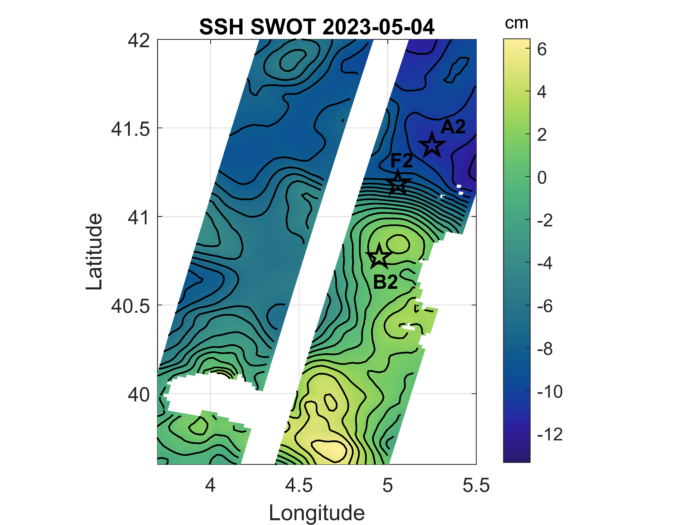
SWOT sea surface height measurements show an anticyclonic eddy that was not visible with nadir altimetry. SWOT data were acquired during stations B2 (located inside the anticyclonic eddy), station locations are indicated with black stars. Credits: Rolland et al. 2026
The paper “Near-inertial wave trapping inside a fine-scale anticyclonic eddy during the BioSWOT-Med 2023 cruise: turbulence and energy flux” published on Journal of Geophysical Research: Oceans investigates how fine scales control the spatio-temporal variability of turbulence around the North Balearic Front, which is a fine-scale front in a moderately energetic area in the Northwestern Mediterranean Sea.
The work used data from track #3 of the SWOT satellite during its 1-day repeat orbit in the spring 2023, as well as in situ data gathered during the BioSWOT-Med cruise. The authors examined the evolution of turbulence when the front experience strong wind events. The study shows that fine-scale eddies are as important as larger eddies in modulating ocean turbulence, in particular when trapping near-inertial waves.
An adaptive sampling strategy informed by near-real time SWOT data
The BioSWOT-Med cruise implemented an adaptive in situ sampling strategy that combined Lagrangian and Eulerian measurements to target a fine-scale frontal area. Near-real time satellite data of sea surface height from SWOT satellite as well as gridded nadir altimetry and wind reanalysis data were used to inform the cruise trajectory and helped identifying the sampling stations. In situ data (microstructure measurements, CTD measurements and stratification, horizontal currents) were collected using ship-based observation platforms as well as drifters and gliders.
Based on ship thermosalinograph data, three different water masses were identified in the proximity of the front: water mass “A”, situated in a cyclonic area with saltier and cooler water north of the front; water mass ”B” south of the front and corresponding to an anticyclonic area with fresher and warmer waters; water mass ”F” corresponding to the frontal area separating A and B. The anticyclonic area is dominated by an eddy well captured by SWOT.
The combination of fortuitous meteorological events and the synoptic oceanographic situation, with an anticyclone visible in SWOT observations but too small to be detected by nadir altimetry SSH maps, created an ideal occasion to explore for the first time the interactions between near-inertial waves and an eddy at fine scales. In particular, the study investigates how a small eddy can trap near-inertial waves and thus propagate their wind-derived energy at depth into the water column.
Fine-scale eddies can trap near-inertial waves and transfer wind energy into the ocean interior
“In this study, the Balearic front separates a fine-scale anticyclonic eddy from a cyclonic area. Near-inertial waves are generated at large scale but are only trapped in the anticyclonic eddy. The front acts as a barrier for the near-inertial wave propagation. While the near-inertial waves propagate at depth into the eddy, they generate vertical shear that in turn leads to enhanced turbulence. On the other side of the front the absence of trapping (and then, of near-inertial wave propagation) explain the absence of turbulence enhancement” says Robin Rolland, post-doctoral researcher at the University of Bremen and first author of the study.
The study found that fine-scale eddies are efficient for trapping near-inertial waves and driving vertical fluxes of energy below the mixed layer. “In the past, this process of trapping has been observed in large anticyclonic eddies (ones that nadir altimetry could capture) or studied in idealized numerical studies. In principle, to be trapped, the near-inertial waves should be smaller than the anticyclonic eddy. In this study, we show that this process also occurs in smaller (fine-scale) anticyclonic eddy, for which the size of the near-inertial waves can be similar. Among previous observations of this process, only a few provided microstructure measurements, and even less provided vertical energy flux estimations, which are both important to quantify its effect on the mixing and the ocean energetics. We were able to provide both in this study” says Rolland.
The fraction of the vertical kinetic energy flux to the wind power input into inertial motions (WPI) is a crucial metric to quantify the input of energy from the wind forcing to the deep ocean. Rolland and colleagues were able to calculate that the near-inertial waves studied during the BioSWOT-Med cruise were able to carry 20% of the wind energy at a depth of 60 m and 8% of the wind energy at a depth of 210 m. These values are comparable with the few previous estimates in much larger eddies.
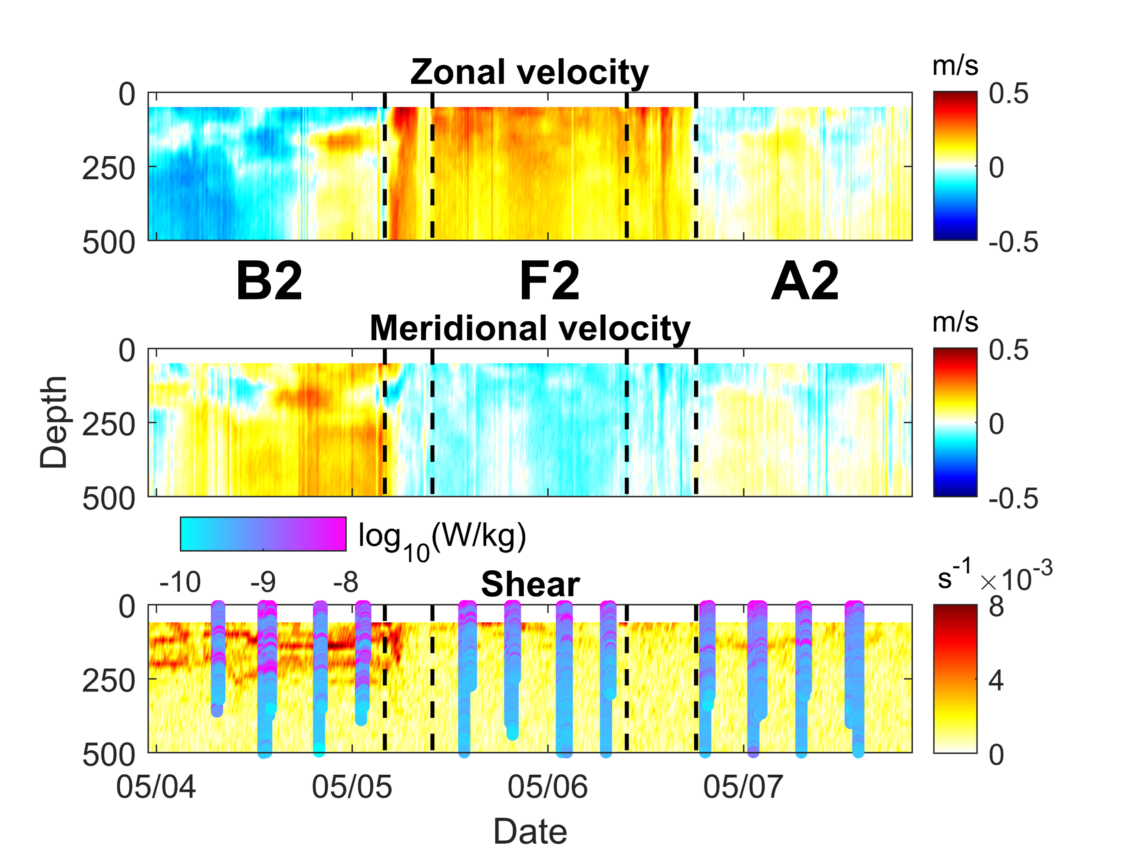
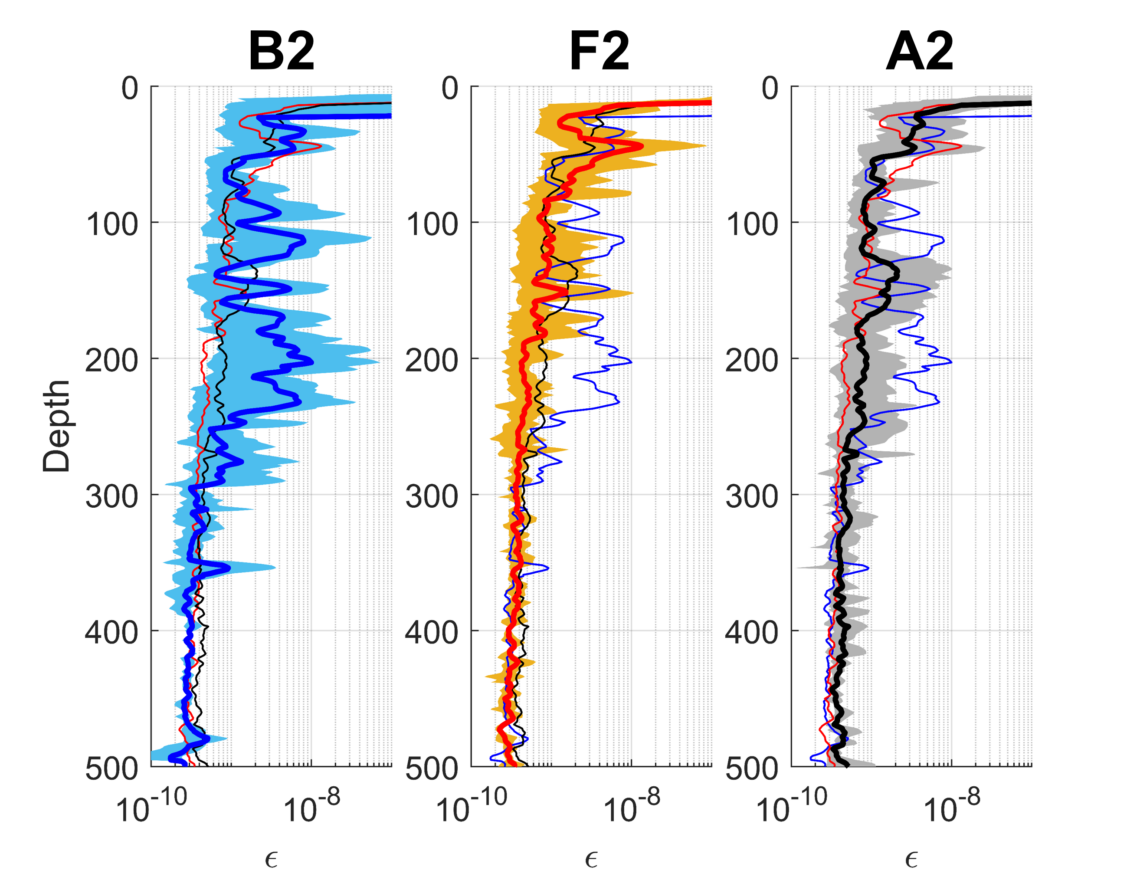
(Left) Trapping of the near internal wave in the eddy. Ship-ADCP 38 kHz velocities and shear during stations B2, F2 and A2. Superimposed on the shear is the dissipation rate of turbulent kinetic energy measured by the Vertical Microstructure Profiler. Vertical dashed line indicate transits from stations B2 to F2 and F2 to A2. A strong near-inertial wave signal is visible in the first 250-300 m at B2. The trapping is highlighted by the abrupt drop in shear between B2 and F2. (Right) Increase in dissipation in the eddy compared to the front zone and the cyclonic area. Station-averaged profiles of the dissipation rate and min-max range (shaded area). The dissipation is increased by one to two orders of magnitude down to ~250 m at B2 compared to F2 and A2. Credits: Rolland et al. 2026.
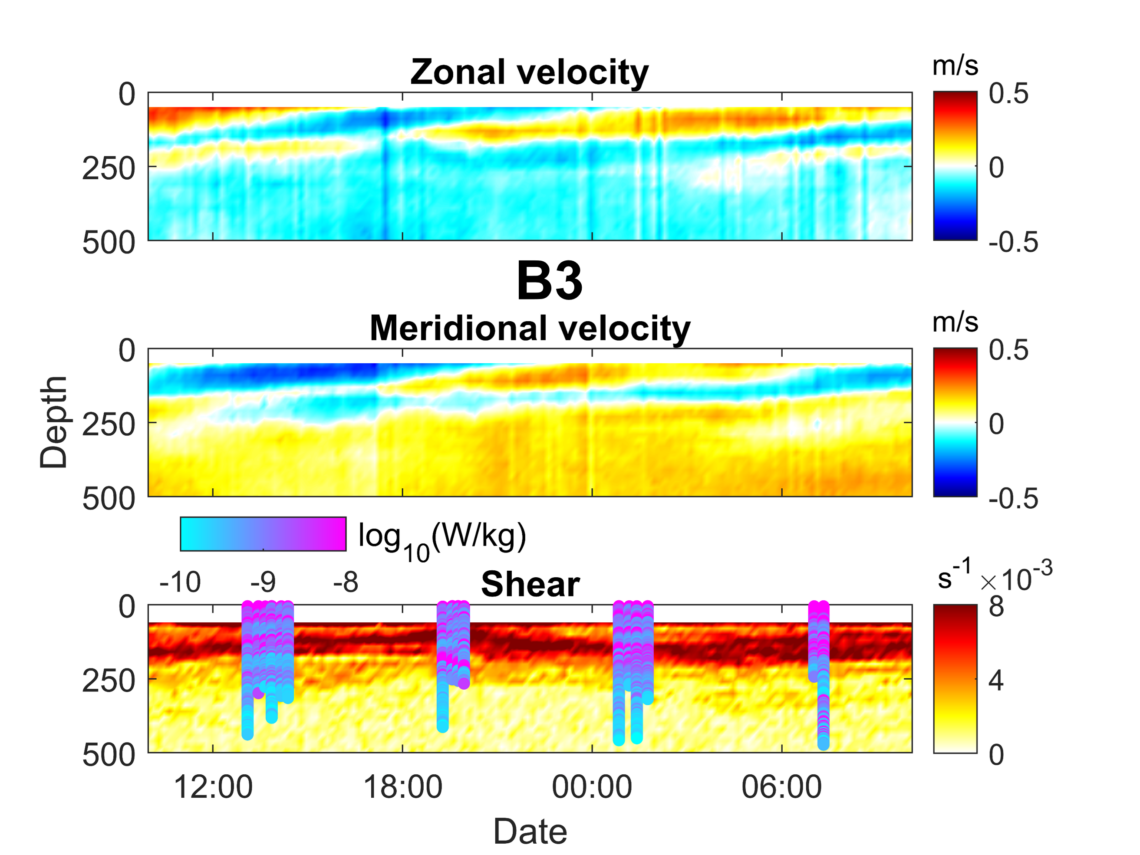
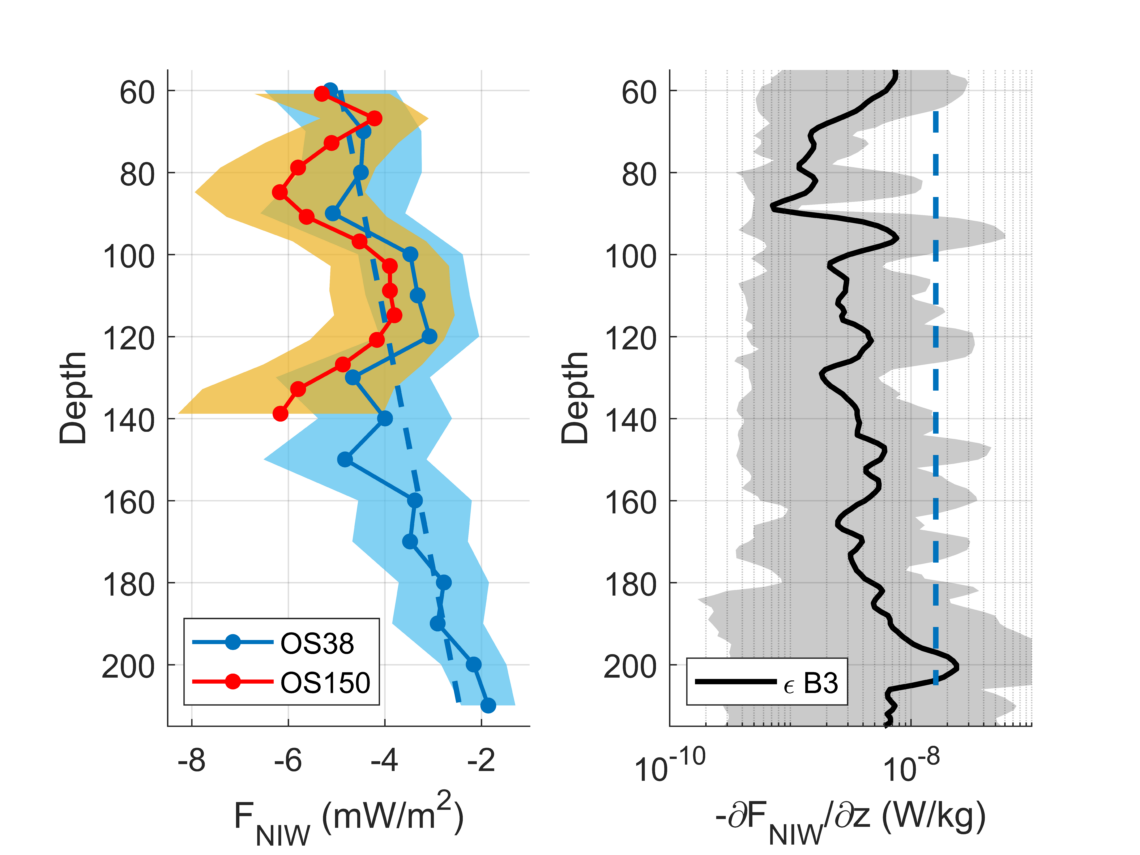
(Left) Ship-ADCP (38kHz) velocities and shear during stations B3. Superimposed on the shear is the dissipation rate of turbulent kinetic energy measured by the Vertical Microstructure Profiler. (Right) Near-inertial wave kinetic energy vertical flux (F_NIW) from Ship-ADCP 38 kHz and 150 kHz velocities measured during station B3. The dotted blue line is a linear fit on the flux from Ship-ADCP 38 kHz. Credits: Rolland et al. 2026.
A new challenge for Earth System Models and global energy budgets
Data from SWOT show that fine scale eddies as the one sampled during the BioSWOT-Med cruise are common in the Northwestern Mediterranean Sea. Before SWOT, all these eddies were not well captured by nadir altimetry (Fig 7 of Rolland et al.). “The process of trapping of near-inertial waves by fine-scale eddies could be widespread in the Mediterranean Sea, and then that its contribution to the turbulence (hence mixing) of the Mediterranean Sea can be significant. From this study it is complicated (if not impossible) to give an estimation, but this work shows that investigating its global contribution is of interest for the Mediterranean circulation” says Rolland.
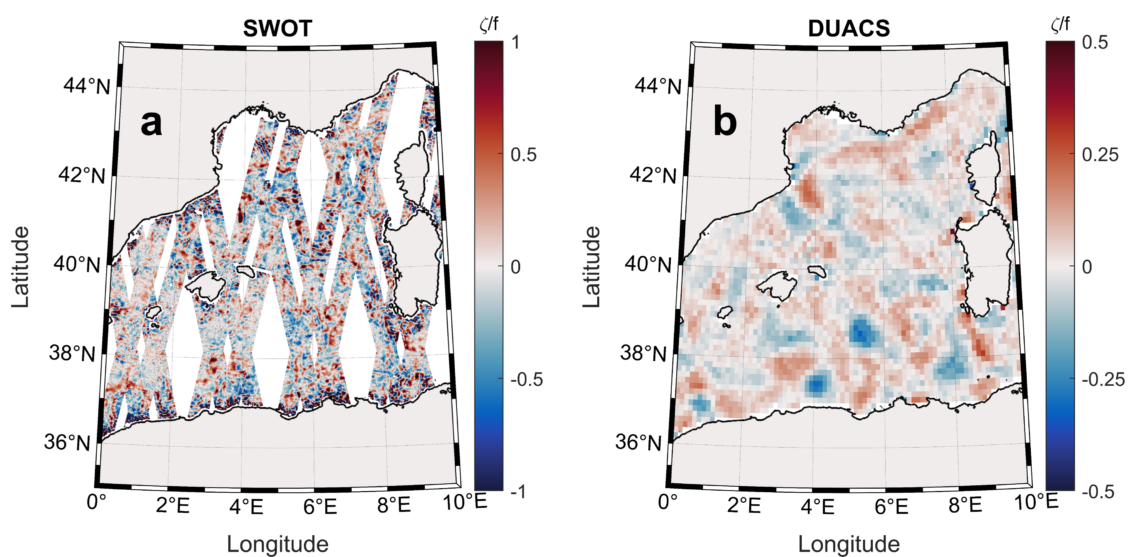
SWOT captures small structures previously elusive to nadir altimetry. (a) SWOT vorticity derived from the SSH using the geostrophic assumption between 20 and 24 August 2023. (b) Gridded nadir altimetry geostrophic vorticity on 22 August 2023. Note the different color scales. Credits: Rolland et al. 2026.
These findings have important implications for the understanding of energy transfer in low to moderate energetic regions – which correspond to the majority of the global ocean – and for investigating how this might change with climate change. “These results suggest the possible existence of a previously underestimated energy pathway connecting wind with the ocean interior and mediated by eddies with a radius of few tens of km. Quantifying and then parameterizing this energy pathway should contribute to the reduction of the incertitude for Earth System Models, in particular in low to moderate energetic regions, and to a better understanding of biogeochemical processes” says Francesco d’Ovidio, senior CNRS researcher at LOCEAN, Paris, and SWOT Ocean PI for CNES.
The work was supported by French spatial agency Centre Nationales Etudes Centre National d’Etudes Spatiales (CNES) and the French National Research Agency (BIOSWOT ANR-23-CE01-0027).
Citation: Rolland, R., Bouruet-Aubertot, P., Cuypers, Y., Bosse, A., Petrenko, A., Maytie, T., et al. (2026). Near-inertial wave trapping inside a fine-scale anticyclonic eddy during the BioSWOT-Med 2023 cruise: Turbulence and energy flux. Journal of Geophysical Research: Oceans, 131, e2025JC022984. https://doi.org/10.1029/2025JC022984
Contact: Robin Rolland (rrolland@uni-bremen.de)
A new study developed a generative statistical approach to reanalyse a scarce and highly variable phytoplankton dataset collected in a frontal zone in the South of the Balearic Islands in 2018. The method will be applied to larger datasets, including both global satellite analyses and in situ data (nutrients, fluxes, phytoplankton, zooplankton and grazing rates) such as those acquired during the BioSWOT-Med campaign.
The paper, ‘A statistical approach to unveil phytoplankton adaptation to ocean fronts‘, has been published in Advances in Statistical Climatology, Meteorology and Oceanography. The study developed a generative statistical approach to reanalyse a scarce and highly variable phytoplankton dataset collected in a frontal zone in the South of the Balearic Islands, Western Mediterranean Sea, in 2018.
SPECIFIC PHYTOPLANKTON COMMUNITIES CAN EMERGE IN FINE-SCALE OCEANIC FRONTS
“Our reanalysis revealed that, within the front, a new community distinct from those in adjacent water masses accounts for 70% of the frontal community. This indicates that specific phytoplankton communities can emerge in fine-scale oceanic fronts” says Théo Garcia, first-author of the study.
Despite the difficulty in observing and sampling such physical structures, which results in a limited number of frontal observations, the Bayesian modelling approach applied in the study provides statistical evidence of the influence of the front on phytoplankton community composition, allowing to overcome data scarcity and high variability.
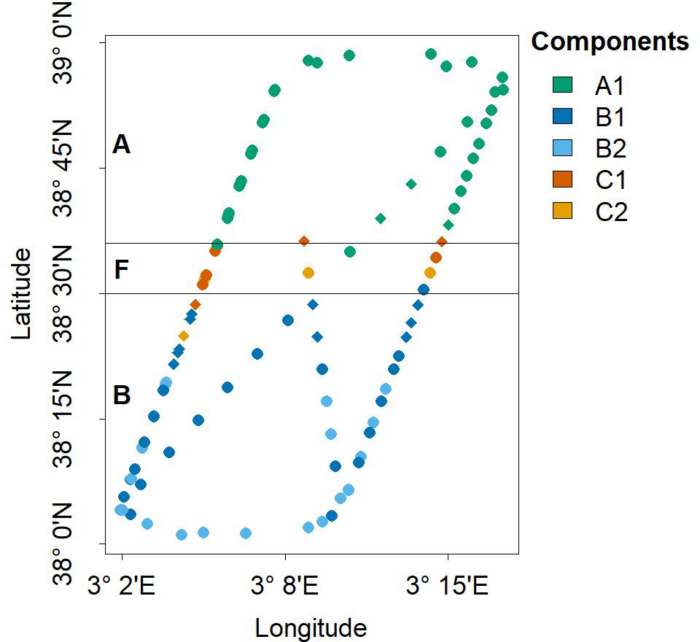
Spatial distribution of the phytoplankton modeled communities. Shapes and colors representing their community and sub-community classification, identified as the dominant component and sub-component of the Gaussian mixtures model applied to the data set. Copyright: Garcia et al. 2026
A METHOD THAT CAN BE USED WITH SWOT DATA ON PHYTOPLANKTON
The method applied in the study reshaped the understanding of a moderately energetic front in the western Mediterranean Sea, previously seen as merely a hydrodynamic boundary between two communities. Indeed, results from the reanalysis suggest the frontal zone represents a distinct ecological environment where a unique community emerged.
This “refuge effect” of the front needs further validation. The authors plan to investigate whether fronts generally act as boundaries or foster frontal-adapted communities using further datasets. In particular, the method will be applied to larger datasets, including both global satellite analyses and in situ data (nutrients, fluxes, phytoplankton, zooplankton and grazing rates) such as those acquired during the BioSWOT-Med campaign.
Indeed, the method can be applied to SWOT data. SWOT measures sea surface at a high resolution. This allows to detect small physical structures that can’t be observed with conventional altimetry. “SWOT provides new opportunities to sample biological communities within these smallest physical features. Combining SWOT data, with biological in situ observations and our new statistical method, will allow us to go deeper in the understanding and the quantification of the role of the smallest fine-scale structures in biodiversity patterns” says Garcia.
The work is the result of a collaboration between statisticians (from the Institut de Mathématiques de Marseille & Laboratoire d’analyse et de mathématiques appliquées) and oceanographers (from the Mediterranean Institute of Oceanography MIO & MBARI) as part of the rODEo project (Order and Disorder in a Turbulent Ocean).
Citation: Garcia, T., Oms, L., Milhaud, X., Doglioli, A., Messié, M., Vandekerkhove, P., … & Pommeret, D. (2026). A statistical approach to unveil phytoplankton adaptation to ocean fronts. Advances in Statistical Climatology, Meteorology and Oceanography. https://doi.org/10.5194/ascmo-12-21-2026
Contact: Théo Garcia theo.garcia@univ-amu.fr
The first detailed investigation of zooplankton distribution at fine scales in the North Balearic Front has been published in Biogeosciences. The work was carried out during the BioSWOT-Med cruise under the coordination of François Carlotti. François, who passed away earlier this January, has been a pioneer in the study of zooplankton from the polar oceans to the Mediterranean Sea.
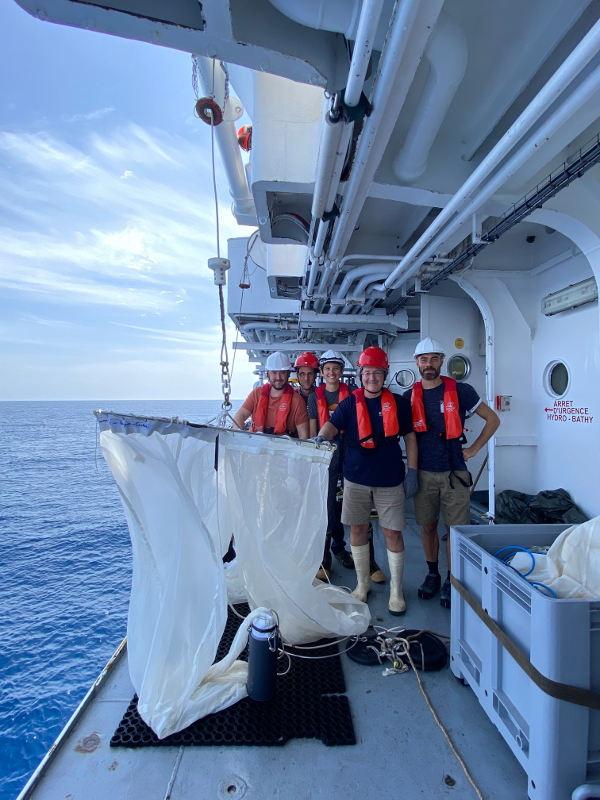
François Carlotti (front, with red helmet and white boots) and the “Zooplankton Busters” during the BioSWOT-Med cruise.
The paper “The North Balearic Front as an ecological boundary: zooplankton fine-scale distribution patterns in late spring” published in Biogeosciences presents the first detailed investigation of zooplankton distribution at fine scales in the North Balearic Front. Results from the study challenge general assumptions about the ecological role of oceanic fronts. In particular, the North Balearic Front exhibited characteristics more akin to a boundary between water masses than a zone of pronounced biological accumulation.
The North Balearic Front is one of the most pronounced geostrophic frontal zones in the Northwestern Mediterranean Sea and separates water masses of the Provencal Basin to the north and the Algerian Basin to the south. Data were collected during the BioSWOT-Med cruise in spring 2023. During the cruise, an adaptive multidisciplinary sampling approach was applied, using information provided by daily SWOT images available during the SWOT 1 day repeat orbit.
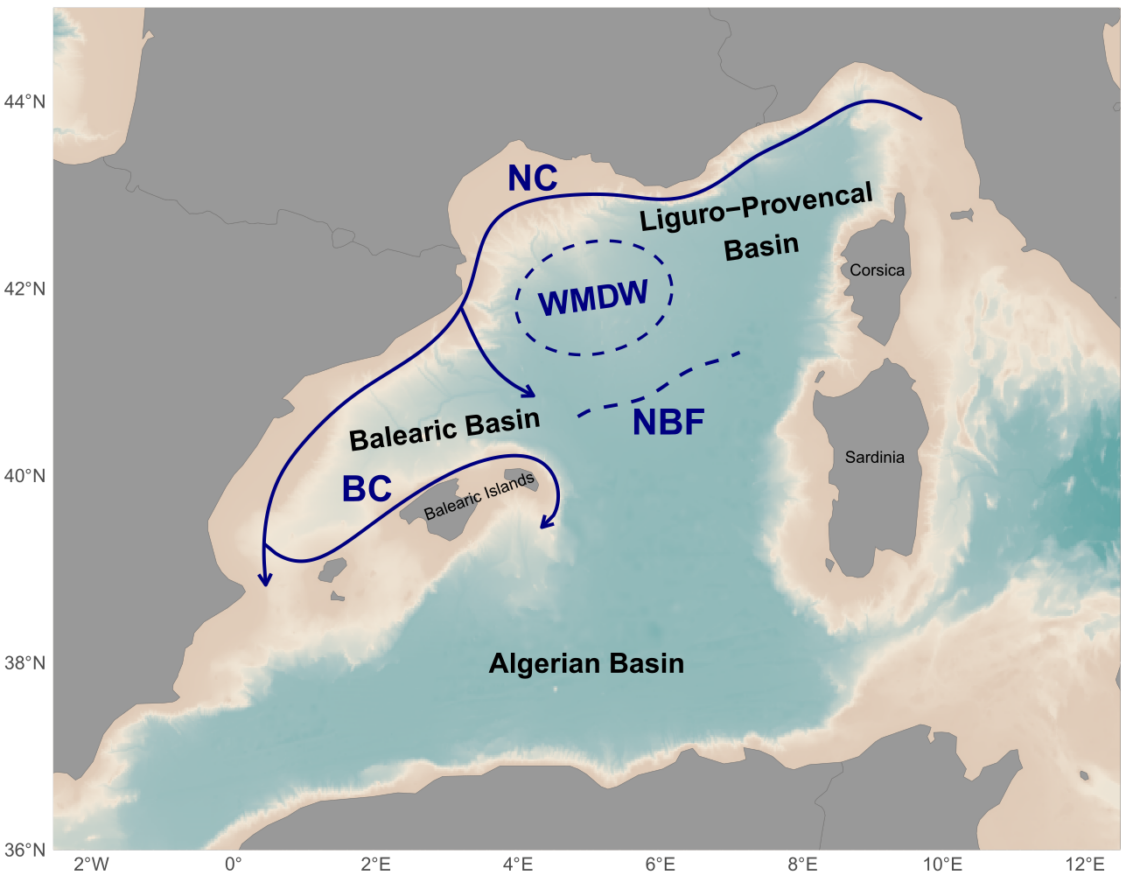
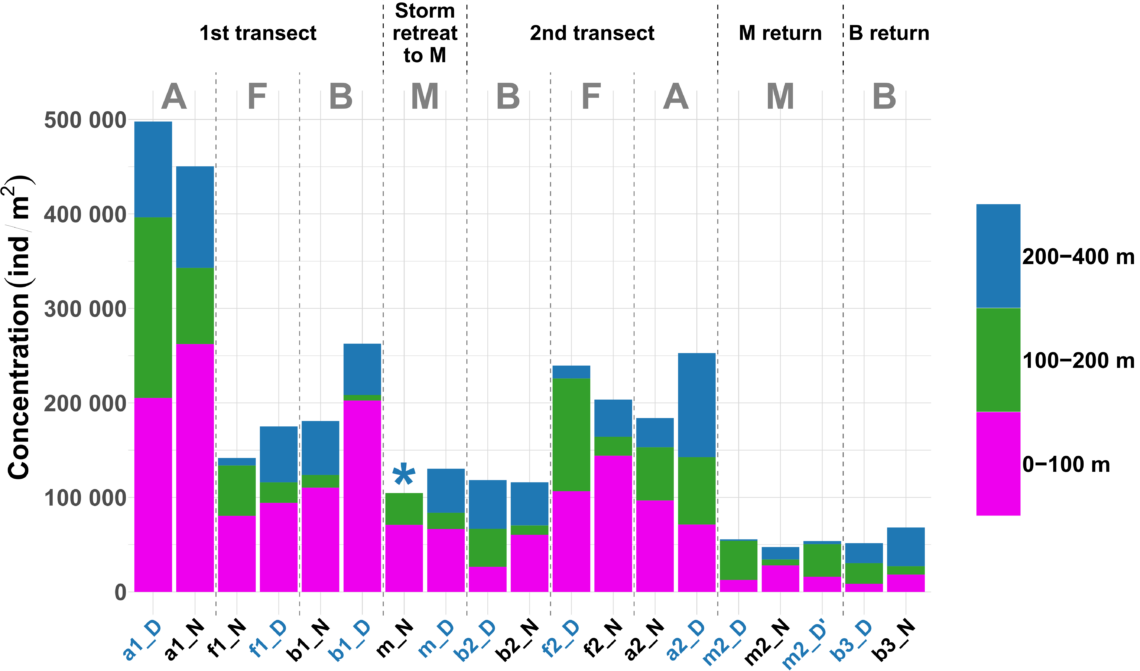
Map of the Northwestern Mediterranean Sea showing the major oceanographic features (left) and concentration of zooplankton at the sampling stations carried out during the BioSWOT-Med cruise (right). From Duranson et al. in press
Challenging assumptions about the ecological role of fronts in the ocean
Results from the study challenge some general assumptions about the ecological role of fronts in the ocean. “Oceanic fronts are often assumed to act as zones of biomass accumulation and enhanced productivity, but they can also function as ecological boundaries separating distinct communities. Our results support the latter role, as zooplankton abundance was lowest at the North Balearic Front and community composition differed across it, particularly in surface layers. This challenges the general view of fronts as systematic biological hotspots” says Maxime Duranson, first author of the paper and PhD student at the Thünen Institute of Sea Fisheries, Bremerhaven, Germany.
Another key question of the study was whether the front hosted a distinct zooplankton community or represented a mixture of communities from adjacent water masses. “This could not be fully resolved because a storm during the cruise likely disrupted the frontal structure, and blurred fine-scale biological patterns, limiting our ability to detect stable community signatures at the front” says Duranson.
The work was supported by French spatial agency Centre Nationales Etudes Centre National d’Etudes Spatiales (CNES) and is a contribution to the CNES-funded BioSWOT-AdaC project and by the ANR-FRANCE (French National Research Agency) and is a contribution to the BIOSWOT ANR-23-CE01-0027 project.
A legacy of François Carlotti
The study of zooplankton communities in the BioSWOT-Med cruise was carried out under the coordination of François Carlotti, CNRS researcher and director of research at the Mediterranean Institute of Oceanography, in Marseille, France.
François, who passed away earlier this January, has been a pioneer in the study of zooplankton, from the polar oceans to the tropics and the Mediterranean Sea, including both the open ocean and the coastal domain. His research interests included the importance of coupling between hydrodynamic processes, their biogeochemical consequences, and the behavior of organisms. He was known for his leadership in developing quantitative models of zooplankton population dynamics, as well as the contribution of zooplankton to trophic interactions and biogeochemical fluxes in ocean ecosystems.
François was a hard-working and enthusiastic colleague and a fun person. His friendship, as well as his curiosity and analytical mind were very appreciated.
Senior researchers and early careers likewise remember with pleasure the time spent doing research and sharing life with him aboard L’Atalante during the BioSWOT-Med cruise. All colleagues strongly admired François’ commitment to developing strong science while testing new methods, sharing knowledge and enjoying life: he was always engaged more than 100% in everything!
The BioSWOT-Med blog | Interview to François Carlotti during the BioSWOT-Med cruise
Master’s degree in Biodiversity, Ecology and Evolution looking for a PhD position in marine biodiversity conservation.
Drawing on fine-scale surface dynamics observed during a large drifter experiment in the Western Mediterranean Sea, a recent study assessed the quality of SWOT sea level measurements acquired during the 1-day repeat orbit phase. This work establishes a benchmark for extending SWOT sea level assessments to the global ocean.
“La mélodie du tourbillon” is a musical poem inspired by research on eddies in the Mediterranean Sea. It was produced by Tomasi Record and released on the 3rd anniversary of the BioSWOT-Med campaign.
An adaptive, multidisciplinary sampling strategy across a fine-scale front in the North Balearic Sea revealed distinct phytoplankton communities within the front. Results underscore the role of fine-scale variability in maintaining community heterogeneity, suggesting that fronts may act as refuges for non-dominant phytoplankton groups in moderately energetic, oligotrophic conditions.
The animated video "Fabuleuse Rencontres" - currently available in French - focuses on some of the first scientific findings of the BioSWOT-Med campaign, which investigated what drives phytoplankton diversity at fine scales in the Mediterranean Sea.
A study published on Geophysical Research Letters shows that in the North Western Mediterranean Sea, fine-scale eddies can contribute to redistribution of nutrients across distinct scales, first by their accumulation deep inside the eddy and then through lateral diffusion outside it. With climate change, the oligotrophic conditions typical of the Mediterranean Sea are expected to expand in the global ocean and results from this work represents an important contribution in understanding the evolution of biogeochemical processes in the future.
The BioSWOT-Med cruise was the main study site for CNES during SWOT fast-sampling phase. Guided by early SWOT images, it located a fine-scale front in the northwestern Mediterranean Sea and adopted an adaptive Langrangian sampling strategy to gather an unprecedented high-resolution dataset of physical and biological variables across and within the front as well as in a nearby fine-scale eddy. The first four scientific papers from the cruise challenge assumptions about the physical and biological functioning of marine ecosystemsin low energy and low nutrient conditions. Results might apply to the other oligotrophic and moderately energetic regions of the global ocean and provide indication for future developments of earth system models and biogeochemical models.
Using data collected during SWOT fast-sampling phase, a new study shows that fine-scale eddies (<100 km) in the Northwestern Mediterranean Sea are as efficient as large and intense structures found in western boundary currents and the Antarctic Circumpolar Current system in transferring wind energy into the ocean interior. These findings might apply to the rest of the global ocean characterized by low energy and thus provide a new challenge to parameterize this process in Earth system models.
A new study developed a generative statistical approach to reanalyse a scarce and highly variable phytoplankton dataset collected in a frontal zone in the South of the Balearic Islands in 2018. The method will be applied to larger datasets, including both global satellite analyses and in situ data (nutrients, fluxes, phytoplankton, zooplankton and grazing rates) such as those acquired during the BioSWOT-Med campaign.
The first detailed investigation of zooplankton distribution at fine scales in the North Balearic Front has been published in Biogeosciences. The work was carried out during the BioSWOT-Med cruise under the coordination of François Carlotti. Francois, who passed away earlier this January, has been a pioneer in the study of zooplankton from the polar oceans to the Mediterranean Sea.