Hydrologist focusing on long-term dynamics of lake volumes in West Africa and glacial lakes and glaciers in the Himalaya.
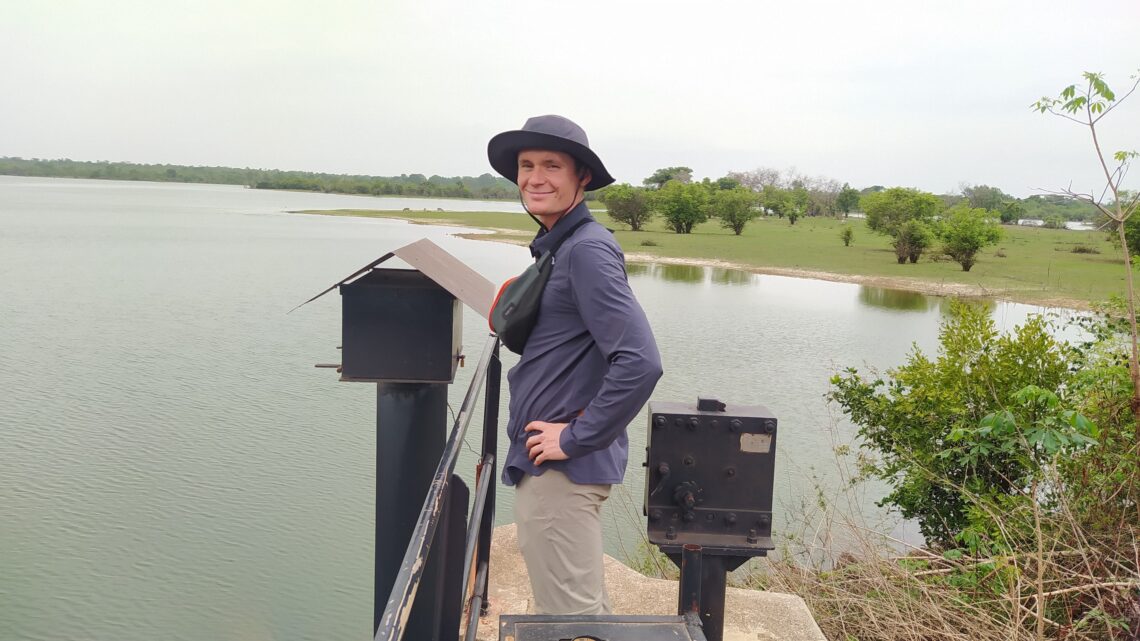
Felix Girard holds a degree in physical engineering from the Institut National des Sciences Appliquées (INSA) of Toulouse. He then worked for one year as a research engineer at the Geosciences Environment Toulouse (GET) laboratory and then completed a joint PhD between GET and the Collecte Localisation Satellites (CLS) company. Since early 2026, he continues to explore the potential of SWOT data for hydrology as a postdoctoral researcher at ISTerre and IGE in Grenoble.
SWOT AdAC: What is your field of research and how did you choose it?
Felix Girard: My PhD thesis focused on the annual and long-term dynamics of lake volumes in West Africa using the SWOT mission. I was really curious about the SWOT mission’s potential for monitoring water resources, and my supervisors had been working on West Africa for several years. It was quite natural, then, that we built together a PhD subject combining SWOT and West African lakes.
SWOT AdAC: How is your field of research related to SWOT?
FG: For over thirty years, space altimetry has been used to monitor lake levels around the globe. It is a highly relevant tool in regions with limited instrumentation, such as West Africa. However, altimeter spatial coverage has been limited to lakes under the satellites’ tracks. With its innovative wide-swath radar interferometer, SWOT enables large-scale observation of inland water in West Africa, shedding light on several thousand previously little-known lakes. In this sense, SWOT provides unprecedented large-scale measurements of lakes’ hydrological functioning and represents a step forward toward comprehensively documenting changes in lake water storages in West Africa.
SWOT AdAC: What do you find exciting about SWOT and the SWOT campaign during the fast-sampling phase in which you participated? How did you contribute to the campaign?
FG: What I find exciting are the accuracy and the spatial coverage with which SWOT observes the elevation of inland waters. Regarding the accuracy, we were for instance able to validate the first SWOT data on the Niandouba reservoir in Casamance, Senegal, in the frame of my PhD. For this, I participated in a 10-day field mission with African partners. During this mission, we installed a pressure transducer to measure the reservoir’s water level in real time. We also leveled the pressure transducer data using several synchronous GNSS measurements to make them comparable with SWOT water surface elevations. The results were excellent: an error of about 4 cm (1-sigma), which is much better than the mission’s scientific requirements! We made similar observations on other smaller African lakes also equipped with instruments, which is very encouraging for the large-scale monitoring of lakes of various sizes using SWOT!
SWOT AdAC: What are your plans after you’ve finished analysing SWOT data?
FG: By comparing SWOT data with field the campaign measurements, and by conducting complementary analyses, we gained confidence to leverage SWOT data on a much larger scale — that of West Africa. Combining this data with long water surface area time series derived from optical imagery allowed us to reconstruct the evolution of the volume of more than 1,300 lakes in West Africa over the last 40 years. This was something that had never been done before I began my PhD and was very difficult with previous altimeters. I shared these results during my thesis defense in December 2025, as well as in an article currently under review. For the next stage of my career, I will continue to explore the potential of SWOT data for hydrology as a postdoc at ISTerre and IGE in Grenoble. However, this time, I will work in a completely different context: glacial lakes and glaciers in the Himalayan mountains, which is certainly much less suited to SWOT… to be continued!
Campaign / Project: Validating SWOT data over the Niandouba reservoir in Casamance, Senegal
