Hydraulic research-engineer focusing on improving the modelling of urban rivers and flood risk protection.
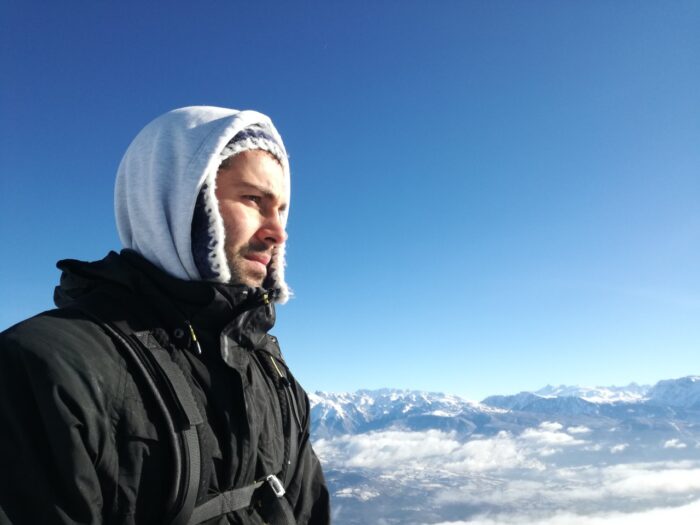
Francisco Rodriguez do Amaral completed a PhD in engineering at the Institut des Géosciences de l’Environnement (IGE) in Grenoble, France. I am now transitioning towards a career in hydraulic engineering, focusing on real-world applications related to flood risk and water management.
SWOT AdAC: What is your field of research and how did you choose it?
Francisco Rodriguez do Amaral: My field of research is the hydraulic modelling of urban and complex river systems. I chose this path during my Master’s in Environmental Fluid Mechanics, where I was exposed to oceanography, atmospheric sciences, and river dynamics. I naturally gravitated towards river systems, particularly because of their societal importance. Rivers are central to water supply, flood protection, energy production, and ecosystem health — especially in mountainous and urban environments.
SWOT AdAC: How is your field of research related to SWOT?
FRdA: During my engineering PhD, I worked on the Saigon–Dong Nai river system in southern Vietnam, a highly urbanised and data-scarce delta. My main objective was to develop high-resolution hydrodynamic models for flood risk applications. A key component of this work was to integrate and evaluate SWOT data within the modelling framework.
This was particularly important because traditional in situ data were very limited. SWOT allowed us to explore new ways of constraining and improving model performance in such challenging environments.
SWOT AdAC: What do you find exciting about SWOT ? How did you contribute to the analysis of the data collected?
FRdA: What excites me most about SWOT is its ability to provide global, high-resolution observations of surface water dynamics — something that was not possible before. This opens the door to studying remote or poorly monitored regions with unprecedented detail.
In my work, I contributed to one of the early assessments of SWOT data for river applications, focusing on a particularly challenging case: a low-gradient, highly urbanised, tidally influenced river system. We evaluated the performance of SWOT-derived water levels and discharge estimates and demonstrated their potential for improving hydraulic modelling in urban settings. These results were published in IEEE Geoscience and Remote Sensing Letters.
SWOT AdAC: What are your plans after you’ve finished analysing SWOT data?
FRdA: I am currently transitioning towards engineering-focused roles where I can apply my expertise to real-world problems. I am particularly interested in working on flood risk management, river restoration, and urban water systems. My goal is to bridge the gap between advanced modelling approaches and practical engineering solutions.
SWOT AdAC: Besides SWOT, are you involved in another exciting research and do you want to share something about it?
FRdA: In parallel with my research, I have been actively involved in teaching and science communication. I am passionate about making complex topics such as river hydraulics and environmental physics accessible to students. I believe that combining research, engineering, and education is key to addressing future water challenges.
Follow Francisco on LinkedIn ResearchGate or Google Scholar
